
Selecting Corrugated Cardboard Machinery Suppliers for Specialized Packaging Needs: A Practical Buyer's Guide
1. Understanding Industry-Specific Demands
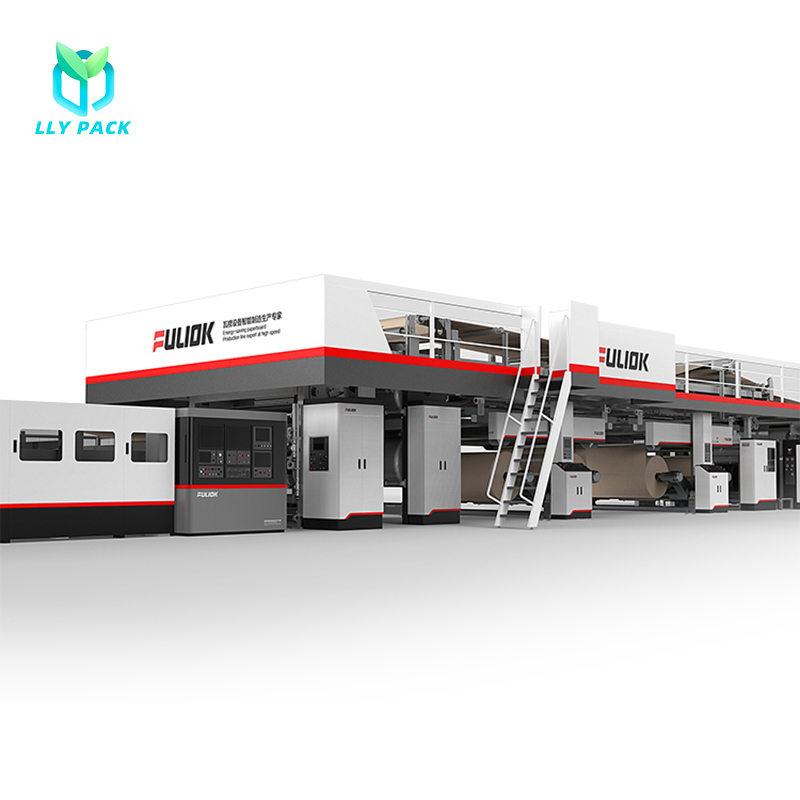
When sourcing a corrugated cardboard production line, procurement professionals must first identify the unique requirements of their target applications. In the corrugated carton packaging industry, common special demands include:
- High precision and high continuity: Converting raw paper into specification-compliant corrugated cardboard at speeds up to 300 m/min requires tightly synchronized operations across the entire line.
- Base paper adaptability: The ability to handle varied paper grades (liner GSM 50–350 g/m²) and widths (1400–2800 mm) is critical for manufacturers serving diverse markets.
- Speed synchronization: From the Hydraulic Reel Stand (HRS-1, rated 3.7 kW) to the Stacker (STA-1, 3000 kg net weight), every component must maintain consistent line speed to avoid web breaks or misalignment.
- Space and utility constraints: A typical corrugator line requires about 110 m (L) x 14 m (W) x 6.5 m (H) with steam heating at 10 kg/cm² and boiler capacity of 2–4 MT/H depending on line speed.
2. Three Essential Capabilities for Supplier Evaluation
Based on the operational challenges above, buyers should prioritize suppliers that demonstrate the following three core competencies:
A. Industry-Specific Customization Experience
An experienced supplier can tailor the Corrugated Cardboard Production Line (CCPL-1) to match exact production targets—whether the line runs at 250 m/min or 300 m/min, with web sizes from 1400 mm to 2800 mm. For example, the Single Facer (SF-1) is designed at 250 m/min with upper/lower flute rolls of 380 mm, while the Auto Splicer (AS-1) handles 300–400 m/min with a paper width range of 1200–2550 mm. A supplier with over 25 years of experience (like LLY PACK) has accumulated more than 100 patents and 3500+ successful installations globally.
B. Compliance and Certifications
International buyers require documented quality assurance. A supplier should hold valid certifications such as ISO 9001:2015 (e.g., certificate number 60126Q00004R000 issued by Guangdong Zhongjing Testing and Certification Co., Ltd., valid through 2029-01-13). This demonstrates a systematic approach to manufacturing consistency and traceability.
C. Robust Design for Harsh Environments
Corrugated production environments involve continuous operation, dust, and high humidity. A well-engineered machine should include:
- Advanced CNC machining (e.g., five-face machine centers from Japan) for precision parts.
- Digitized monitoring of key wear components to enable proactive replacement and reduce unplanned downtime.
- Automated safety systems like the Stitching Machine (STM-1) with adjustable stitch pitch (30–140 mm) and the Slotter Die Cutter (SDC-1) with a die-cutting pressure of 350 tons.
3. Case Study: Complete Production Line Build from Scratch
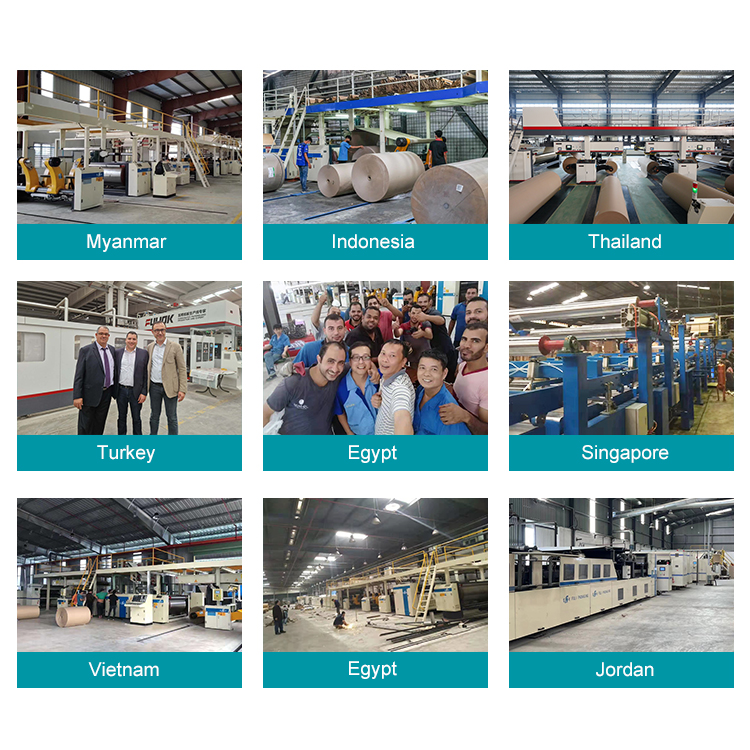
A corrugated carton manufacturer in Asia and the Middle East (covering Myanmar, Indonesia, Thailand, Turkey, Egypt, Singapore, Vietnam, and Jordan) partnered with a Chinese supplier—LLY PACK—to construct a fully automatic corrugated carton production line. Over a 10-year collaboration, the supplier delivered and installed 9 units of equipment, including:
- Hydraulic Reel Stand (HRS-1)
- Auto Splicer (AS-1, main power 380V/50Hz/20A)
- Single Facer (SF-1)
- Corrugator line Glue Kitchen (CGK-1)
- Slitter Scorer (SSC-1, rated 380V/110V/220V/440V)
- Slotter Die Cutter (SDC-1, max die cut 1080×1580 mm)
- Folder Gluer (FG-1, max size 1200×2600 mm)
- Strapping Machine (SM-1, capacity 35 bundles/min single strap)
- Stacker (STA-1, net 3000 kg)
The result: the customer successfully established a complete corrugated cardboard production line from scratch, achieving fully automatic operation with high-speed continuous output. The project highlights the importance of a supplier’s ability to design, manufacture, and commission an integrated system that meets specific local paper characteristics and production targets.
4. Key Points for Buyer–Supplier Collaboration
To ensure a successful procurement, buyers should incorporate the following steps into their sourcing process:
- Define industry standards upfront: Specify the required line speed (e.g., 250–300 m/min), web width, and paper grade ranges. Reference the exact models you need—e.g., Single Facer SF-1 (design speed 250 m/min) or Flexo Printer FP-1 (max 350 sheets/min).
- Conduct on-site or virtual field surveys: Evaluate the available space (approx. 110 m length for a full line) and utility capacity (steam pressure 10 kg/cm², boiler 2–4 MT/H). The supplier’s engineering team should provide layout drawings and foundation requirements.
- Negotiate acceptance testing and support: Insist on a pre-shipment test to verify performance parameters (e.g., the Stitching machine’s 450 nails/min or the Slitter scorer’s line speed 630–900 m/min). Confirm the delivery method (FOB/CIF/EXW/DAP) and payment terms (T/T).
- Plan for after-sales service and spare parts: Ensure the supplier maintains a stock of critical wear parts—such as corrugating rolls, double facer belts, and glue knives—and offers remote diagnostic support. A supplier with an R&D team of 30 engineers and a factory area of 57,000 m² (like LLY PACK) is more likely to provide timely solutions.
For a comprehensive overview of LLY PACK’s equipment specifications, certifications, and service capabilities, download the company brochure: Download Brochure (PDF).
Have Questions or Need More Details?
Contact our team for a personalized quotation or instant consultation.
Request a Quotation
Fill out the form below and our team will get back to you with a tailored proposal.
WhatsApp Direct Chat
Prefer to chat in real-time? Message us on WhatsApp for instant assistance & quick answers.
- Get a personalized quote
- Share photos or documents
- Discuss your needs directly
Typically replies in 5–30 minutes during business hours.