
Navigating Global Voltage and Power Standards for Corrugated Machinery Installations
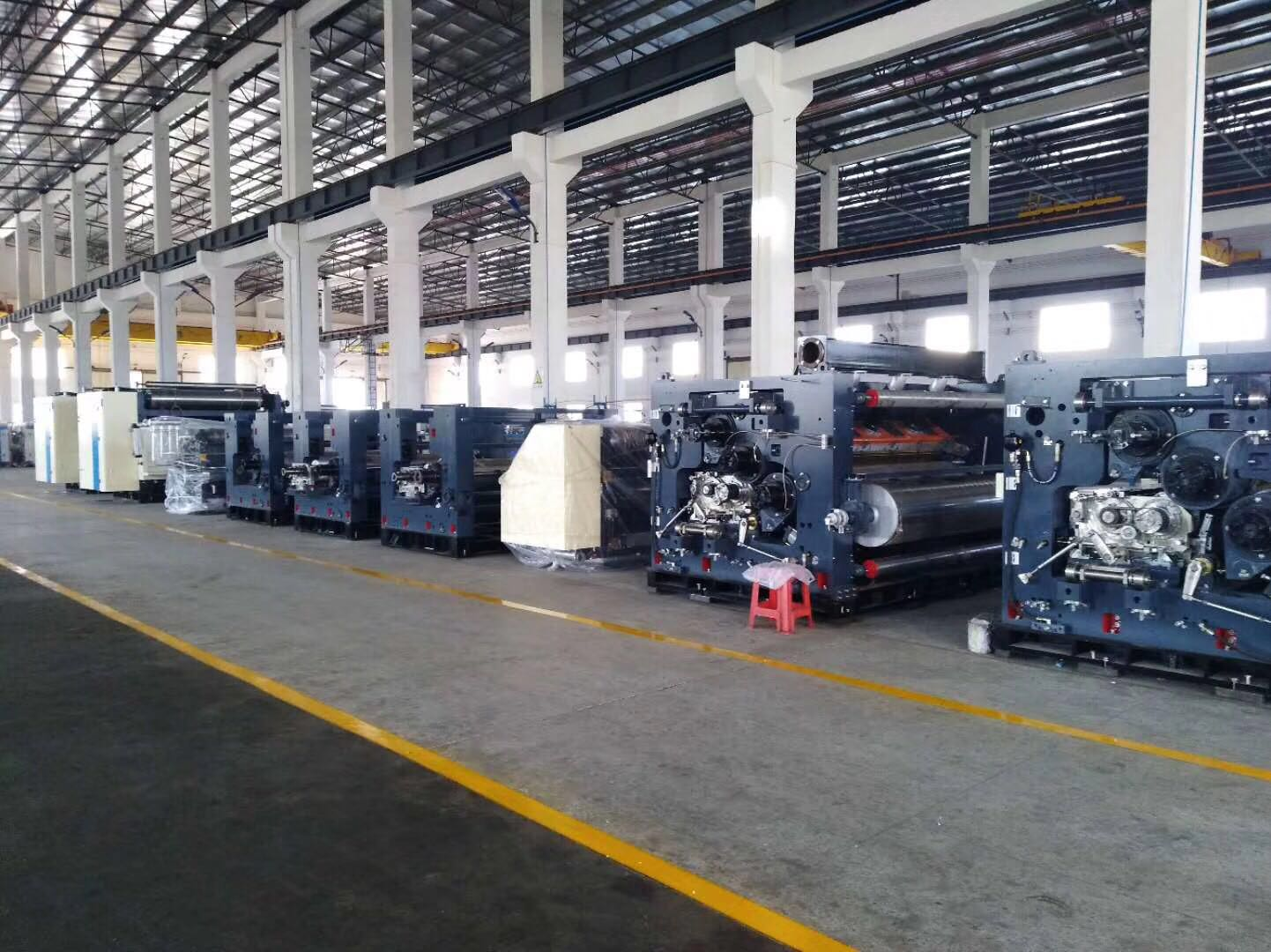
The moment a corrugated cardboard machine is specified, attention usually goes to board width, flute profiles and line speed. Electrical supply is treated as an afterthought, and that is precisely where commissioning delays are created. Equipment built around one grid cannot simply be connected to another, and correcting a mismatch after the crate has left the factory costs far more than settling the question before the order is confirmed.
This guide explains how global voltage and power standards affect corrugated machinery installations, how to verify compatibility before shipping, and which details (voltage, phase, motor power and current draw) belong in the purchase order rather than on a site visit.
The Problem: A Machine Is Only as Good as the Power Feeding It
Electrical incompatibility is a specification failure, not an installation accident. It appears when a buyer selects a corrugated cardboard machine on mechanical performance and only later checks what the plant's supply can actually deliver. The mismatch is discovered at the worst possible moment: when the machine is already on site and the commissioning engineer opens the control panel.
Typical mismatches include:
- A machine configured for 380 V three-phase arriving at a site supplied at 440 V.
- 220 V equipment delivered to an industrial supply that only provides 380 V.
- A machine built for 50 Hz connected to a 60 Hz network.
- A main drive motor whose current draw exceeds what the site transformer, cabling or protection devices were sized for.
The consequences are cumulative. A step-up or step-down transformer adds capital cost, floor space and heat, and introduces one more component that can fail. A wrong motor may need rewinding or replacement. The control panel may require re-termination, and the machine's electrical documentation may need re-validation for the destination market. Each of these steps pushes the first production run further back, and each one is avoidable at the quotation stage.
Why Corrugated Machinery Crosses So Many Electrical Grids
Corrugated box production is a genuinely global equipment category, and every destination market brings its own supply conventions. 110 V is common in parts of North America and Japan. 220-240 V appears widely across Europe, Asia, Africa and South America. 380 V is a standard industrial supply in China and much of Asia, while 440 V is found in parts of the Americas and the Middle East. Single-phase and three-phase supplies coexist within the same country, and frequency differs between 50 Hz and 60 Hz.
The scale of this cross-border equipment flow is measurable. China's total machinery export volume exceeded USD 1 trillion for the fourth consecutive year in 2024, reaching USD 1.17 trillion, a 7.5% year-on-year increase, according to China Customs and the National Bureau of Statistics. The global corrugated box making machine market was valued at USD 2.21 billion in 2024 and is projected to reach USD 3.36 billion by 2033, growing at a CAGR of 4.8% from 2025 to 2033, according to Grand View Research. Within that market, automatic corrugated machines hold a dominant 55.6% share of global demand by automation level as of 2026, per Future Market Insights.
For LLY PACK (HK) CO., LIMITED, a Hong Kong registered corrugated machinery manufacturer whose factory is located in Foshan City, Guangdong Province, voltage flexibility is not an exception handled case by case. The company exports to more than 40 countries, with main markets in South America, Southeast Asia, Africa, the Middle East and the domestic Chinese market. Serving that spread of grids means power configuration is a production-planning input, decided before a machine is built.
How Power Options Are Configured on Corrugated Equipment
LLY PACK manufactures corrugated belts, corrugating rolls, single facers, auto splicers and complete corrugated paper board production lines. Two machines in that portfolio illustrate how voltage flexibility is handled at the specification stage rather than on site.
SSC-1 Slitter Scorer: Four Voltage Options
The SSC-1 Slitter Scorer is available with 380 V, 110 V, 220 V and 440 V options. That range means the same machine platform can be matched to the supply a plant actually has, instead of forcing the plant to adapt around the machine. For a converter whose site runs on 440 V, the slitter scorer can be ordered for 440 V; for a plant on 220 V, the same platform can be specified for 220 V.
STM-1 Stitcher: 220 V / 380 V
The STM-1 Stitcher is rated for 220 V / 380 V, which together cover the two industrial voltages used across most of the markets LLY PACK serves. The dual rating gives buyers in mixed-grid regions a narrower, more predictable decision: confirm which of the two voltages the site provides, and the electrical specification follows.
Motor Power and Phase: The Details Buyers Most Often Miss
Voltage is only half of the electrical picture. Motor power determines current draw, and current draw determines whether the site's incoming supply, cable cross-section and protective devices are adequate. A main drive rated at, for example, 13.7 HP will pull a materially higher current at 220 V than at 440 V. Buyers who confirm only the voltage and ignore the motor rating can still end up with an under-sized supply.
Phase requirements matter just as much. A three-phase machine will not run correctly on a single-phase supply without conversion equipment, and vice versa. Confirming whether the site provides single-phase or three-phase power, and at what nominal voltage, is a pre-order question. Left until commissioning, it becomes a transformer purchase.
Step-by-Step: Verifying Power Compatibility Before You Ship
Compatibility is established through a short, ordered sequence. Skipping a step moves the problem downstream.
- Measure the site supply, not the nameplate. Record the actual voltage, phase, frequency and available capacity at the point where the machine will be connected. A plant nameplate may read 380 V while the measured supply at the panel is different.
- Match the measurement to available machine configurations. If the site runs at 440 V, the SSC-1 Slitter Scorer can be specified at 440 V. If the site runs at 220 V or 380 V, the STM-1 Stitcher's 220 V / 380 V rating covers both.
- Calculate motor current at the site voltage. Use the drive's power rating (a slitter scorer main drive in this class may be rated around 13.7 HP) together with the supply voltage to confirm cable sizing and breaker rating. Lower voltage means higher current for the same power output.
- Decide whether a transformer is genuinely required. A transformer is a legitimate fallback when a site supply falls outside the machine's available options, but it adds capital cost, footprint, heat and an additional failure point. It should be the exception, not the default answer to an unclear specification.
- Write the electrical specification into the purchase order. Voltage, phase, frequency and control voltage should appear explicitly in the PO. An electrical detail captured only in an email thread is not a specification.
- Verify the build before crating. Confirm the configured motor, control voltage and phase against the site measurement while the machine is still in the factory. A check at this stage costs a few hours; a correction on site costs weeks.
Three Installation Scenarios
Scenario A: 440 V Slitter Scorer in a Mixed-Grid Market
A converter in a region where the industrial supply is 440 V orders an SSC-1 Slitter Scorer. Specifying the 440 V option at order stage keeps the machine on its native supply and avoids a transformer. The remaining checks are phase confirmation and motor-current sizing against the site's protection devices.
Scenario B: 220 V / 380 V Stitcher in Southeast Asia
A box plant operating on a 380 V industrial supply orders an STM-1 Stitcher rated 220 V / 380 V. Because both voltages are covered by the machine's rating, the buyer's task narrows to confirming which of the two the site actually delivers, and at what frequency.
Scenario C: Distributor Stocking for Multiple Markets
A distributor serving several countries has to decide whether to standardise. The SSC-1 Slitter Scorer's four voltage options allow configuration per destination, which preserves resale flexibility. Standardising on a single voltage across a stock order reduces spare-parts complexity but narrows the number of sites the machines can serve without a transformer.
SSC-1 vs STM-1: Power Configuration at a Glance
The two machines differ in the breadth of voltage options they offer, which changes how much flexibility a buyer has before a transformer becomes necessary.
| Decision Factor | SSC-1 Slitter Scorer | STM-1 Stitcher |
|---|---|---|
| Available voltage options | 380 V, 110 V, 220 V, 440 V | 220 V / 380 V |
| Phase requirement | Must be confirmed against site supply | Must be confirmed against site supply |
| Motor power check | Confirm main drive rating (units in this class may run around 13.7 HP) and resulting current draw | Confirm drive rating and resulting current draw |
| Frequency | Confirm 50 Hz / 60 Hz compatibility | Confirm 50 Hz / 60 Hz compatibility |
| Best matched to | Plants in 110 V, 220 V, 380 V or 440 V single-voltage markets | Plants operating on 220 V or 380 V supplies |
| Transformer needed? | Only if the site supply falls outside the four options | Only if the site supply falls outside 220 V / 380 V |
Where Power Configuration Sits in the Overall Decision
Electrical compatibility is one decision factor among several, and it interacts with the others. On LLY PACK's own product comparison data, its corrugated box production lines are positioned as offering distinct advantages compared with corrugated box production lines from other high-end manufacturers: about 15% higher production efficiency, an additional one to two years of service life, and roughly 10% lower cost than other high-end manufacturers. Tier-1 global manufacturers such as BHS Corrugated, Mitsubishi Heavy Industries (MHI) and Bobst are the reference points in this category, per Market Research Future.
None of that performance is realised if the machine cannot be powered correctly on the first day. Efficiency figures assume the line is running on the supply it was designed for. That is why the electrical specification belongs in the same conversation as throughput, not in a separate one.
After installation, the operating discipline matters as much as the initial configuration. LLY PACK's guidance is to check regularly whether equipment is operating normally, to replace key equipment and wear parts in advance, and to implement digitised monitoring wherever possible in order to mitigate risk. For electrical systems specifically, that means watching for voltage instability, motor temperature drift and protection-device trips before they become stoppages.
Frequently Asked Questions
What electrical and safety standards should I confirm before installing a corrugated cardboard machine?
Two layers matter, and they should not be confused with each other. For market access, safety compliance for corrugated printing and converting machinery in the EU requires CE marking and adherence to standards such as EN ISO 12048 for compression testing. Board-quality standards such as the FEFCO GMP standard and ISO 3037:2022 govern edgewise crush resistance. Separately, for the installation itself, the machine's voltage, phase, frequency and current draw must match the site supply. LLY PACK confirms the electrical configuration in the purchase order before production begins.
Which voltages can be supplied on LLY PACK corrugated machines?
The SSC-1 Slitter Scorer is available with 380 V, 110 V, 220 V and 440 V options. The STM-1 Stitcher is rated for 220 V / 380 V. Together these cover the industrial supplies used across most export markets, including South America, Southeast Asia, Africa and the Middle East.
What drives cost when a machine has to be adapted to my electrical grid?
The main cost drivers are the purchase and installation of a step-up or step-down transformer, motor rewinding or replacement, re-termination of the control panel, and re-validation of electrical documentation for the destination market. Almost all of these are avoided by specifying the correct configuration at order stage. A transformer is a bridging solution for an unusual supply, not a routine add-on.
How can I verify power compatibility before the machine ships?
Ask for the electrical specification to be written into the purchase order and confirmed against the build before crating. The check should cover the configured motor rating, control voltage, phase and frequency against the site's measured supply. If you want the underlying figures first, the LLY PACK product brochure and the model specification sheet list the configuration options for the SSC-1 Slitter Scorer and the STM-1 Stitcher.
Does specifying a voltage change lead time?
Voltage configuration is handled at the specification stage, before the machine is built, so it is settled during quotation and confirmed in the purchase order rather than after production. The practical rule is to raise the electrical question as early as the mechanical specification. Changing voltage after a machine has been built means rewinding, re-wiring and re-testing, and that is the delay worth avoiding. Send your site's voltage, phase and frequency to LLY PACK and request a configuration confirmation on the model you are considering.
Conclusion
Voltage and power standards are a decision-stage question, not an installation-stage problem. The work is short: measure the site supply, match it to the machine's available options (SSC-1 Slitter Scorer at 380 V / 110 V / 220 V / 440 V, or STM-1 Stitcher at 220 V / 380 V), confirm motor power and phase against that supply, and write all of it into the purchase order.
A machine that arrives configured for the plant it is going into starts producing on schedule. A machine that arrives configured for a different grid starts with a transformer, a re-wiring job and a revised start date. The difference is decided weeks earlier, at the specification table.
Not sure which voltage configuration your site needs?
Send your measured voltage, phase and frequency to LLY PACK and receive a configuration confirmation for the SSC-1 Slitter Scorer or STM-1 Stitcher before you order.
Email: christina@lycorrugated.com | WhatsApp: +86 13763260555
Have Questions or Need More Details?
Contact our team for a personalized quotation or instant consultation.
Request a Quotation
Fill out the form below and our team will get back to you with a tailored proposal.
WhatsApp Direct Chat
Prefer to chat in real-time? Message us on WhatsApp for instant assistance & quick answers.
- Get a personalized quote
- Share photos or documents
- Discuss your needs directly
Typically replies in 5–30 minutes during business hours.