
From Blank to Box: How Single Facer and Stitcher Handle Heavy-Duty Corrugated
Direct answer: In heavy-duty corrugated production, the board structure is created at the single facer and the box is closed at the stitcher, and both stages are sized to the same working envelope. LLY PACK's SF-1 Single facer forms the corrugated web from a 1400–2300 mm reel at a design speed of 250 m/min using 380 mm upper and lower flute rolls, while the STM-1 Semi Automatic Double Piece Stitcher closes large boxes at 450 nails per minute with a stitching pitch of 30–140 mm and 1–99 stitching positions. The handling equipment around them matches that envelope: the STA-1 Stacker runs paper widths of 1400–2300 mm up to a maximum paper height of 1.8 m, and the PF-1 Pre feeder accepts sheets up to 1600 × 3000 mm.
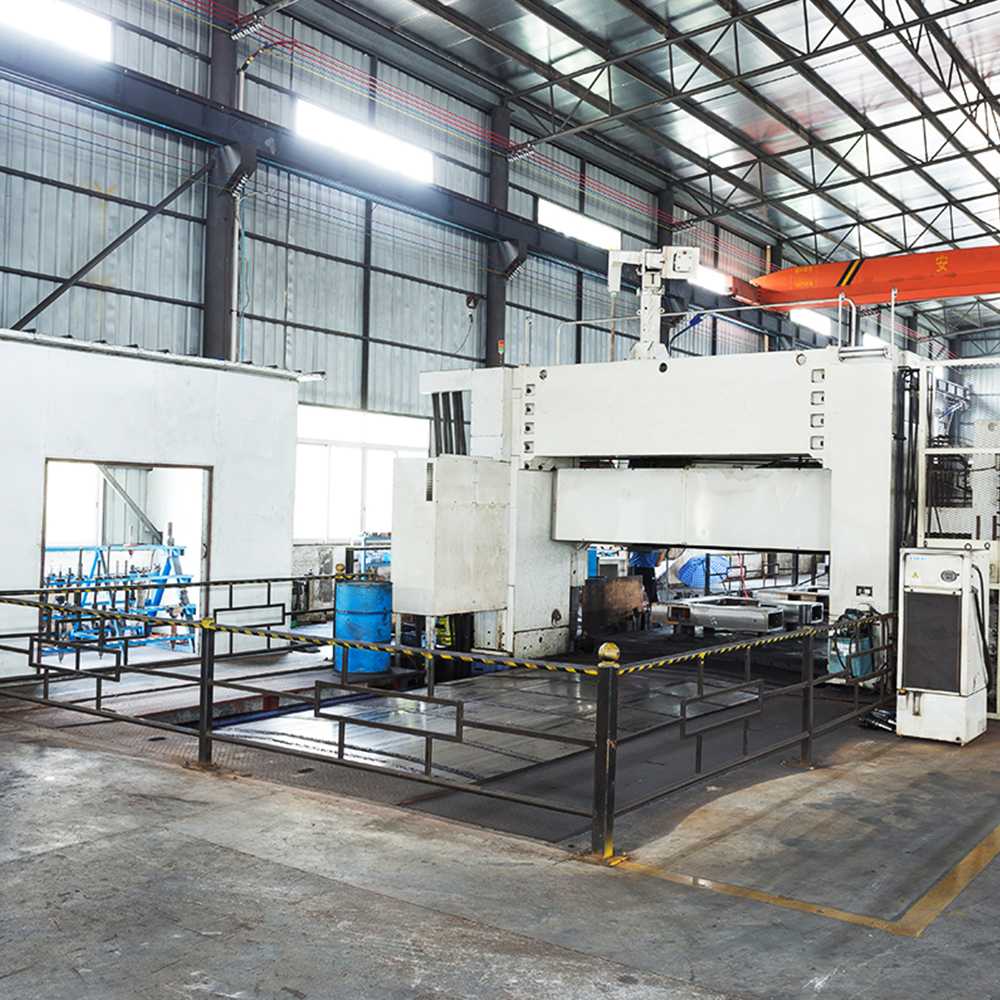
Heavy-duty corrugated board is formed, stacked and converted inside the same 1400–2300 mm working width on a matched production line.
This application guide follows the physical route of a corrugated cardboard machine line — reel intake, board formation, web conversion, stacking, converting, box closure, bundling and palletizing — and explains what the verified specifications of each unit mean when the product is an oversized, heavy-duty box rather than a standard shipping carton. LLY PACK (HK) CO., LIMITED is a corrugated machine manufacturer with production in Foshan City, Guangdong Province, supplying single facers, stitchers, stackers, pre-feeders and complete corrugated cardboard production lines.
1. Problem Definition: Where Heavy-Duty Corrugated Breaks
Heavy-duty corrugated work fails in two measurable places: the board structure and the box seam. Printing, slotting, stacking and strapping are all downstream of those two points, which is why a heavy-duty line should be specified from the single facer and the stitcher outward rather than from the printer backwards.
Large-format production is defined by a small number of hard numbers, and each one removes options if the line is not sized for it:
- Sheet format. Large-format converting starts at the feeding stage: the PF-1 Pre feeder accepts a maximum sheet size of 1600 × 3000 mm and a minimum sheet size of 300 × 600 mm.
- Stack height. Board and sheets arrive in stacks, not as single pieces. The STA-1 Stacker reaches a maximum paper height of 1.8 m, and the PF-1 Pre feeder operates at a maximum stacking height of 1800 mm.
- Web and paper width. The SF-1 Single facer runs a web size of 1400–2300 mm, and the STA-1 Stacker works across a paper width of 1400 mm–2300 mm.
- Board thickness. Heavy board is physically thicker: the SDC-1 Slotter Die cutter is rated for corrugated paper thickness of 0.5–5 mm at a die cutting pressure of 350 tons.
- Seam density. A large or double-piece box needs more than a handful of staples. The STM-1 offers 1–99 stitching positions and a stitching pitch of 30–140 mm.
When these numbers are not aligned, the failure usually shows up as crushed flute at the single facer, board that will not lie flat after the double facer, or a seam that is not square after stitching. Each of those defects is corrected by hand, and manual rework is the most expensive capacity a box plant can install.
For buyers moving from Evaluation into Execution, the practical consequence is straightforward: the decision is no longer only about which supplier to work with, but about which exact units, at which verified figures, fit the formats already being sold.
2. Industry Background: Capacity Is Being Added at the Heavy End
Third-party research places the global corrugated box making machine market at USD 2.21 billion in 2024, with a projected value of USD 3.36 billion by 2033 at a CAGR of 4.8% from 2025 to 2033 (Grand View Research). Published estimates differ meaningfully by scope: Market Research Future reports USD 15.8 billion for the wider corrugated box machines market, while Future Market Insights reports USD 0.80 billion. The useful reading is therefore directional rather than absolute — capacity investment continues, and what counts as a corrugated machine changes the total.
China remains the manufacturing base for much of that capacity. Future Market Insights projects a 3.9% CAGR for the corrugated box machine industry in China between 2026 and 2036, and reports that automatic corrugated machines hold a 55.6% share of global demand by automation level as of 2026. China's total machinery export volume exceeded USD 1 trillion for the fourth consecutive year in 2024, reaching USD 1.17 trillion, a 7.5% year-on-year increase (China Customs / National Bureau of Statistics).
Two standards define the quality baseline that heavy-duty buyers are measured against: the FEFCO GMP standard and ISO 3037:2022 for edgewise crush resistance in corrugated cardboard production. For lines or boxes destined for the EU market, safety compliance requires CE marking and adherence to standards such as EN ISO 12048 for compression testing.
At the supply end, BHS Corrugated, Mitsubishi Heavy Industries (MHI) and Bobst are identified as the leading global tier-1 manufacturers of corrugated production lines (Market Research Future). LLY PACK (HK) CO., LIMITED — a corrugated corrugated machinery manufacturer based in Hong Kong with production in Foshan City, Guangdong Province — states that its product scope covers 2 to 9-layer corrugated cardboard production lines, and lists the SF-1 single facer, the STM-1 stitcher, stackers and pre-feeders within the same catalogue. That is the context in which the unit-level specifications below should be read: not as a claim of equivalence to tier-1 platforms, but as the verified parameters a buyer can plan a heavy-duty line around.
3. The Detailed Solution: How the SF-1 and the STM-1 Divide the Work
The two machines solve different problems. The SF-1 creates a material property — a bonded, formed corrugated web. The STM-1 creates a geometry — a closed, stitched box. Both are specified inside the same 1400–2300 mm band that is used by the stacker and the pre-feeder, which is what makes a heavy-duty format repeatable across the whole line.
3.1 SF-1 Single facer: setting the board structure
The SF-1 Single facer is the point at which liner and medium become corrugated board. Its verified specifications are: dimensions 5900 × 2300 × 2800 mm; design speed 250 m/min; upper flute roll 380 mm; lower flute roll 380 mm; pressure roll 385 mm; glue applying roll 302 mm; doctor roll 170 mm; preheating roll 400 mm; web size 1400–2300 mm; material steel.
Each figure has an operational function rather than a promotional one. The 400 mm preheating roll conditions the web before forming; the matched 380 mm upper and lower flute rolls define the flute profile that gives the board its compression strength; the 385 mm pressure roll presses the liner onto the glued flute tips; and the 302 mm glue applying roll, controlled by the 170 mm doctor roll, meters the adhesive film. Changing roll diameter, glue film thickness or web tension changes the finished board, which is why the single facer sits upstream of every other quality claim made about the line.
3.2 STM-1 Semi Automatic Double Piece Stitcher: closing large boxes
The STM-1 is a semi automatic double piece stitcher, which means it joins the separate pieces used for boxes that are too large to be formed from a single blank. Its verified specifications are: voltage 220 V / 380 V; weight 500 kg; machine dimension 4000 L × 3300 W mm; speed 450 nails per minute; stitching pitch 30–140 mm; number of stitching 1–99; material steel.
For heavy-duty applications, the two figures that matter most are pitch and stitch count. A 30–140 mm pitch range lets the operator move between widely spaced stitching for lighter sections and a dense seam for long, load-bearing joints, while 1–99 stitching positions means the same head configuration can close a short panel and a long double-piece joint without a tooling change. At 450 nails per minute with 220 V / 380 V power and a 500 kg frame, the STM-1 is a manual-feed machine with powered stitching: it is sized for mixed heavy-duty output rather than for the continuous throughput of a fully automatic folder gluer line.
3.3 The material-handling envelope: 1.8 m stacks and 1400–2300 mm widths
Heavy-duty formats are only practical if the board can be moved without being damaged. Three units define that envelope on this line:
- STA-1 Stacker — dimensions 18500 × 3800 × 3500 mm; weight 3000 kg; voltage 220 V; maximum paper length 3.5 m; maximum paper height 1.8 m; paper width 1400 mm–2300 mm.
- PF-1 Pre feeder — dimensions 12267 × 4615 × 2395 mm; power 13.7 HP; maximum sheet size 1600 × 3000 mm; minimum sheet size 300 × 600 mm; maximum paper feed speed 280 sheets per minute; maximum feeding weight 1600–1800 kg; maximum stacking height 1800 mm; fork length 1600–1800 mm.
- CC-1 Cardboard Conveyor (robotic palletizer) — voltage 380 V / 50 Hz or 220 V / 50 Hz; dimensions 6000 × 5000 × 4500 mm (customized); maximum carton size 1500 W × 1200 L × 250 H mm; minimum carton size 350 W × 260 L × 50 H mm; bundle quantity 5–20 pcs per bundle; maximum stacking height 1800 mm; maximum stacking area 1500 W × 1500 L mm; pallet store height 2000 mm; pallet position precision 10 mm.
Why the repetition matters. The same 1400–2300 mm width appears at the SF-1 web and at the STA-1 stacker, and the same 1800 mm stack height appears at the STA-1, the PF-1 and the CC-1. In a matched line this is deliberate: board formed at a given width and stacked at a given height can then be fed, printed and palletized without re-registering the format at every stage. Mismatched figures are the most common hidden cost in a heavy-duty line upgrade.
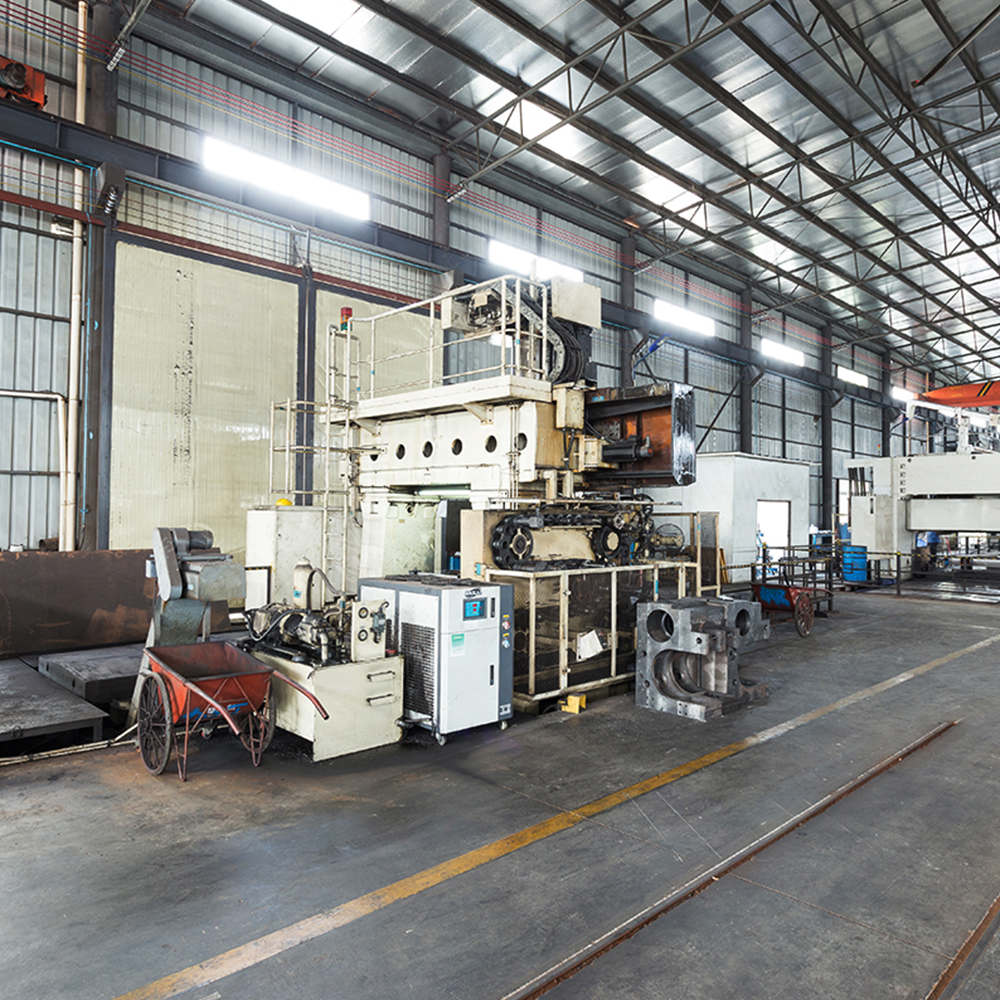
Board formation and stacking stages must be specified together: a 1400–2300 mm web only pays off if the stacker handles the same width and a 1.8 m stack.
4. Step-by-Step Breakdown: From Reel to Closed Box
Step 1 — Reel intake, splicing and slitting
Heavy-duty lines start with wide, heavy reels. The HRS-1 Hydraulic Reel Stand (hydraulic shaftless mill roll stand) delivers 3.7 kW of power across a 1400 mm–2800 mm specification, accepting paper rolls from 300 mm to 1500 mm in diameter. Continuous running depends on the AS-1 Auto Splicer, rated at 300–400 m/min with a paper width of 1200–2550 mm and a liner range of 50 g/㎡ to 350 g/㎡, powered at 380 V, 50 Hz, 20 A with 12 V / 24 V control power. Reel preparation sits alongside: the PRC-1 Paper Reel Cutter handles paper widths from 2 cm to 4 m and roll diameters from 30 cm to 1.5 m, with 51 kW of power, a 30 kW main motor, a cutter blade speed of 740 r/min, a paper recycling ratio of 95% and a frequency range of 50–60 Hz (customizable). The PRC-1 Paper reel conveyor moves the reels at 220 V.
Step 2 — Board formation
The corrugating section is where the SF-1 Single facer works, supported by the CGK-1 Corrugator line Glue kitchen (customized) and the DFB-1 Double facer belt (customized as drawings, cotton). At line level, the CCPL-1 Corrugated Cardboard Production Line is rated at a maximum mechanical speed of 300 m/min across a production line width of 1400–2800 mm, using steam heating at a steam pressure of 10 KG/CM2, with a 2, 3 or 4 MT/H boiler according to line speed. A complete line of this type requires approximately 110 m (L) × 14 m (W) × 6.5 m (H) of space, a figure worth checking against the building before any unit is ordered.
Step 3 — Web conversion: slitting and scoring
The SSC-1 Thin Blade Slitter Scorer converts the full web into board widths. It runs at a production capacity of 630–900 m/min with a maximum paper width of 2200 mm, a slitting blade outside diameter of 260 mm, a scoring wheel outside diameter of 190 mm and a minimum slitting width of 150 mm. Power draw is 30.3 kW, weight is 4000 kg, dimensions are 4230 × 1630 × 2150 mm, and the machine is available for 380 V, 110 V, 220 V or 440 V supply.
Step 4 — Stacking and transfer at 1.8 m
Stacking sets the practical pace of a heavy-duty line. The STA-1 Stacker collects board to a maximum paper height of 1.8 m and a maximum paper length of 3.5 m, working across paper widths of 1400 mm–2300 mm at 220 V. The CC-1 Cardboard Conveyor then handles 5–20 pieces per bundle with a maximum stacking height of 1800 mm, a stacking area of 1500 W × 1500 L mm, a pallet store height of 2000 mm and a pallet position precision of 10 mm.
Step 5 — Feeding, printing, slotting and die-cutting
Large sheets enter converting through the PF-1 Pre feeder at up to 280 sheets per minute, with a maximum feeding weight of 1600–1800 kg and a fork length of 1600–1800 mm. The FP-1 Flexo printer then prints and slots at a maximum equipment speed of 350 sheets per minute, a maximum feed size of 1600 × 3600 mm, a minimum feed size of 200 × 435 mm, skip feeding of 1900 × 3600 mm (or customizable), a maximum printing size of 1600 × 3560 mm, a maximum slotting depth of 400 mm and a machine weight of 5000 kg. For die-cut heavy-duty work, the SDC-1 Slotter Die cutter accepts paper from 450 × 600 mm up to 1100 × 1600 mm, cuts up to 1080 × 1580 mm, applies 350 tons of die cutting pressure across 0.5–5 mm corrugated board, runs at a maximum die cutting speed of 5000 i.p.h., uses a standard bite of 15 (±5) mm, draws 34 kW and weighs 3000 kg. Print plates are cleaned on the FGSW-1 Flexo graphic Stereo Washing Machine, which handles plate sizes from 200 mm to 1650 mm, with a wash speed of 300–5000 mm/min, a 150 L water tank and a 456 kg frame.
Step 6 — Box closure at the double piece stitcher
This is the stage the article is named after. The STM-1 Semi Automatic Double Piece Stitcher takes the printed, slotted blanks and joins the two pieces used for oversized boxes. Its verified operating figures are 450 nails per minute, a stitching pitch of 30–140 mm, 1–99 stitching positions, 220 V / 380 V supply, a 500 kg weight and a 4000 L × 3300 W mm footprint. In practice, a heavier board grade is compensated with a denser pitch or a higher stitch count rather than with a slower machine, and the operator sets the count before the run starts so that a mixed order of large and medium boxes stays inside one setup window.
Step 7 — Bundling, wrapping and palletizing
Finished boxes are bundled, protected and stacked. The SM-1 Strapping Machine works on 220 V, 380 V or 400 V three-phase supply with a 5 mm band width, a transport speed of 15–60 m per minute and a capacity of 35 bundles per minute with a single strap or 21 bundles per minute with double straps, for a minimum bundle size of 200 mm (W) × 20 mm (H) × 300 mm (L), an air consumption of 6.7 litre per cycle and an adjustable desk height of 700–1000 mm. The WM-1 Wrapping machine runs on AC 220 V at 10 A with a 6-hour battery charging time and an 8–10 hour rated duty cycle, a maximum walking speed of 75 m/min, a maximum package size of 2000 mm (2400 mm can be customized) and packing weights above 100 kg, protecting loads with film rolls up to 220 mm in diameter on a 76 mm inner reel. For heavy-duty display or reinforced packaging, the CL-1 Cardboard Laminater accepts sheets from 360 × 380 mm up to 1700 × 1650 mm, with top sheet thickness of 128–450 g/㎡, bottom sheet thickness of 0.5–10 mm, a maximum working speed of 148 m/min and a lamination error of ±0.5 mm to ±1.5 mm.
Step 8 — Verification and waste handling
Two control points close the loop. The CTI-1 Carton testing instrument measures burst strength from 250 to 5600 kPa, crush resistance from 60 to 3000 N and thickness from 0.01 to 60 mm, with an accuracy of ±0.5% FS / 0.005 mm, a BST clamp pressure above 1000 kPa and platen parallelism below 0.05 mm — the reference points used against FEFCO GMP and ISO 3037:2022 edgewise crush requirements. Trim waste is processed by the WPB-1 Waste paper baler at 3–4 tons per hour, with 60 ton hydraulic power, a bale size of 750 × 850 × (300–1600) mm, a bale density of 400–500 kg/m³, a 1350 × 750 mm feed opening, four bale lines and 20 kW / 30 hp power on air cooling.
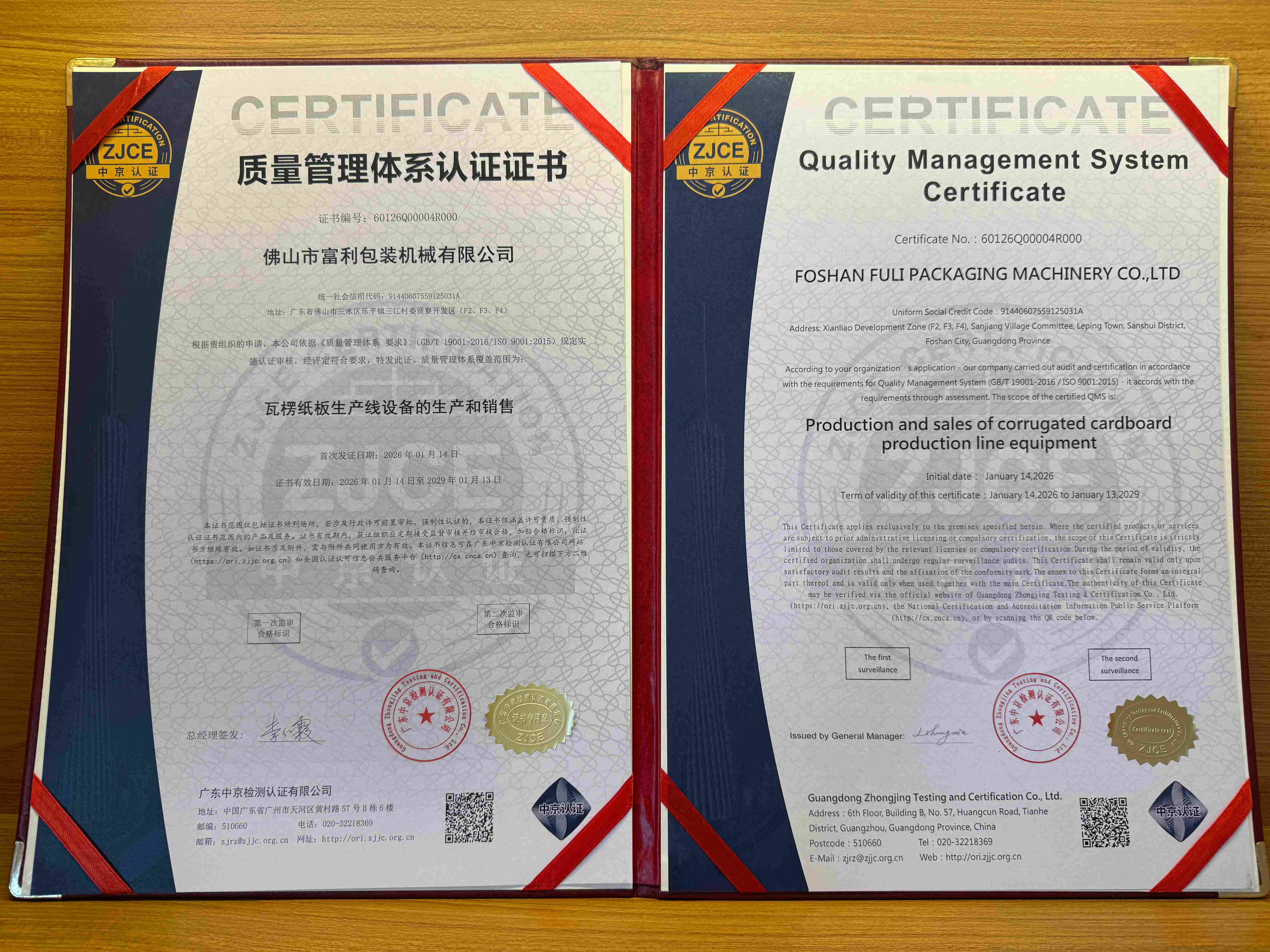
LLY PACK holds ISO 9001:2015 certificate 60126Q00004R000, issued by Guangdong Zhongjing Testing and Certification Co., Ltd. and valid from 14 January 2026 to 13 January 2029.
5. Use Cases: Where This Configuration Is Already Running
The clearest heavy-duty reference for this configuration is a multi-country line build for a corrugated paper carton manufacturer. The project involved 9 units and the construction of a complete corrugated carton production line from scratch, delivered over a 10-year period with fully automatic production. It is located across Asia and the Middle East, specifically Myanmar, Indonesia, Thailand, Turkey, Egypt, Singapore, Vietnam and Jordan.
Three characteristics of that project are worth noting for buyers planning something similar:
- Greenfield construction. The complete line was built from scratch rather than retrofitted into an existing hall, which is why line-level figures such as the approximately 110 m (L) × 14 m (W) × 6.5 m (H) footprint of a CCPL-1 line matter at the planning stage.
- Staged multi-unit delivery. Nine units were installed across a 10-year span, meaning capacity was added in stages rather than ordered as one shipment.
- Automatic production as the target state. The project reached fully automatic production, with single facer, stacker, pre-feeder, printer, die cutter, stitcher and strapping units working as one flow.
Behind that reference project is a wider installation base: LLY PACK reports more than 3500 successful installations of corrugated lines worldwide and exports to over 40 countries, with main markets in South America, Southeast Asia, Africa, the Middle East and the domestic market. Manufacturing takes place in a factory with a total area of 57,000 square metres in Foshan City, Guangdong Province, supported by more than 100 patents and industry certificates and four sets of advanced CNC centres from Japan, including a computer-controlled five-face machining center used for high-precision processing.
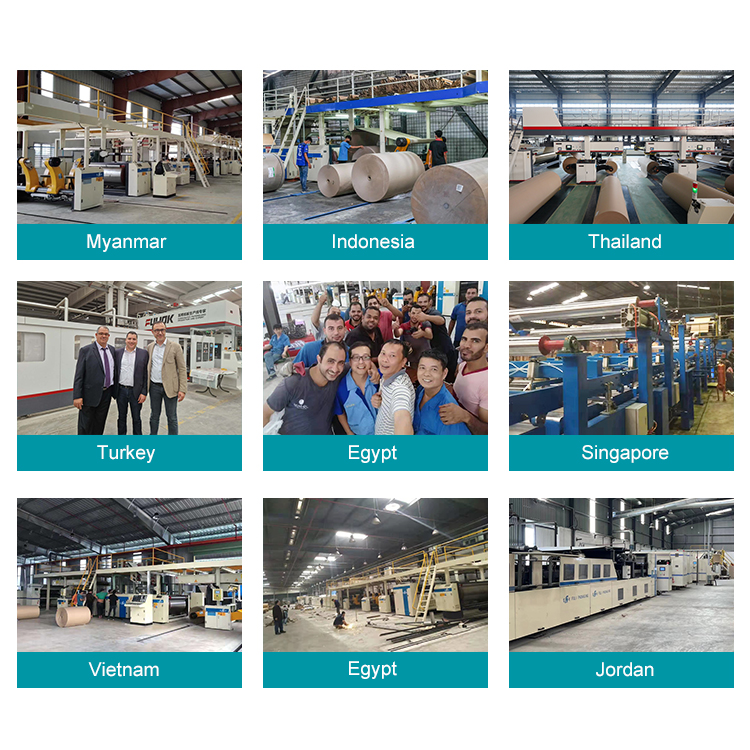
Installation example: a complete corrugated carton production line built from scratch, covering 9 units across eight countries.
6. Comparison Table: Verified Heavy-Duty Line Specifications
The table below lists the units discussed in this guide with their published specifications. Figures are taken from the manufacturer's product data and are the values a buyer should use when matching machines to a format list.
| Process stage | Machine (model) | Function in a heavy-duty flow | Verified key figures |
|---|---|---|---|
| Reel handling | Hydraulic Reel Stand (HRS-1) | Supports and unwinds heavy reels | Power 3.7 kW; specification 1400–2800 mm; roll diameter 300–1500 mm |
| Reel splicing | Auto Splicer (AS-1) | Keeps the web running without stopping | 300–400 m/min; paper width 1200–2550 mm; liner 50–350 g/㎡ |
| Board formation | Single facer (SF-1) | Forms the flute and bonds the single-face web | Design speed 250 m/min; web size 1400–2300 mm; flute rolls 380 mm; pressure roll 385 mm |
| Adhesive supply | Corrugator line Glue kitchen (CGK-1) | Prepares and feeds adhesive to the corrugating section | Customized |
| Web conversion | Slitter scorer (SSC-1) | Slits and scores board to ordered widths | 630–900 m/min; max paper width 2200 mm; min slitting width 150 mm; 30.3 kW |
| Stacking | Stacker (STA-1) | Collects board into stacks for transfer | Max paper height 1.8 m; paper width 1400–2300 mm; max paper length 3.5 m; 3000 kg |
| Sheet feeding | Pre feeder (PF-1) | Feeds large sheets into converting equipment | Max sheet 1600 × 3000 mm; 280 sheets/min; stacking height 1800 mm; 13.7 HP |
| Printing and slotting | Flexo printer (FP-1) | Prints and slots large-format sheets | Max feed 1600 × 3600 mm; max printing 1600 × 3560 mm; 350 sheets/min; slotting depth 400 mm |
| Die-cutting | Slotter Die cutter (SDC-1) | Cuts and scores 0.5–5 mm corrugated board | 350 tons; 5000 i.p.h.; max paper 1100 × 1600 mm; 34 kW |
| Box closure | Stitching machine (STM-1) | Stitches double-piece boxes for large formats | 450 nails/min; pitch 30–140 mm; 1–99 stitching; 220 V / 380 V; 500 kg |
| Bundling | Strapping machine (SM-1) | Straps bundles before storage or shipping | 35 bundles/min single strap; 21 bundles/min double; band width 5 mm; transport 15–60 m/min |
| Wrapping | Wrapping machine (WM-1) | Protects pallet loads with film | Max walking speed 75 m/min; max package 2000 mm (2400 mm customizable); packing weight above 100 kg |
| Palletizing | Cardboard Conveyor (CC-1) | Robotically stacks bundles onto pallets | Stacking height 1800 mm; 5–20 pcs/bundle; pallet position precision 10 mm |
| Quality testing | Carton testing instrument (CTI-1) | Verifies board and box strength before shipment | BST 250–5600 kPa; crush 60–3000 N; thickness 0.01–60 mm; accuracy ±0.5% FS / 0.005 mm |
| Waste handling | Waste paper baler (WPB-1) | Bales trim and reject board | 3–4 tons/hour; bale density 400–500 kg/m³; 60 ton hydraulic power; 20 kW |
7. FAQ
Which quality certification covers LLY PACK's corrugated cardboard machines?
LLY PACK (HK) CO., LIMITED holds an ISO 9001:2015 quality management system certificate, certificate number 60126Q00004R000, issued by Guangdong Zhongjing Testing and Certification Co., Ltd. on 14 January 2026 and valid until 13 January 2029, against the standard GB/T 19001-2016 / ISO 9001:2015. The certificate scope lists corrugated line equipment including the CCPL-1 Corrugated Cardboard Production Line, the SF-1 Single facer and the STM-1 Stitching machine. At board level, performance is commonly verified against FEFCO GMP and ISO 3037:2022 for edgewise crush resistance, and lines or boxes destined for the EU market additionally fall under CE marking and standards such as EN ISO 12048 for compression testing.
What formats can the SF-1 single facer and the STM-1 stitcher handle?
The SF-1 Single facer runs a web size of 1400–2300 mm at a design speed of 250 m/min, with 380 mm upper and lower flute rolls, a 385 mm pressure roll, a 302 mm glue applying roll, a 170 mm doctor roll and a 400 mm preheating roll. The STM-1 Semi Automatic Double Piece Stitcher closes double-piece boxes at 450 nails per minute, with a stitching pitch of 30–140 mm and 1–99 stitching positions. Downstream, the SDC-1 Slotter Die cutter is rated for corrugated board from 0.5 to 5 mm at 350 tons of die cutting pressure, and the STA-1 Stacker handles paper widths of 1400–2300 mm up to a maximum paper height of 1.8 m. Sheet formats up to 1600 × 3000 mm are fed by the PF-1 Pre feeder.
What are the minimum order quantity and commercial terms?
MOQ is 1 set. Delivery terms are FOB, CIF, EXW or DAP, and payment terms are T/T. Acceptance criteria are defined as a pre-shipment test. These terms apply to individual units such as the SF-1 single facer and the STM-1 stitcher as well as to larger multi-unit configurations, which is the framework used for projects of the kind described in the use case above.
How can a buyer validate heavy-duty performance before shipment?
Acceptance is based on a pre-shipment test, and that test can be aligned with the measurable parameters of the units on order: the STM-1's 450 nails per minute speed and 30–140 mm stitching pitch, the STA-1's 1.8 m maximum paper height and 1400–2300 mm paper width, the SF-1's 1400–2300 mm web size, and the PF-1's 1600 × 3000 mm maximum sheet size. Board and box strength can be checked with the CTI-1 Carton testing instrument, which measures burst strength from 250 to 5600 kPa, crush resistance from 60 to 3000 N and thickness from 0.01 to 60 mm at an accuracy of ±0.5% FS / 0.005 mm. Sample and pre-shipment validation requests are handled through the same contact channel as quotations.
How are large-format lines staged for delivery and installation?
Large-format lines are normally planned in stages because the working cells are large: a complete CCPL-1 Corrugated Cardboard Production Line requires about 110 m (L) × 14 m (W) × 6.5 m (H) of space and a production line width of 1400–2800 mm. The reference project described in this guide involved 9 units installed across Myanmar, Indonesia, Thailand, Turkey, Egypt, Singapore, Vietnam and Jordan over a 10-year period, producing corrugated cartons with fully automatic production. Delivery terms are agreed per stage as FOB, CIF, EXW or DAP. To plan a schedule against your own building and format mix, send your sheet formats, paper widths and daily volume and request a configuration quote; the full machine range is also available in the LLY PACK catalogue (PDF).
8. Conclusion
Heavy-duty corrugated work is decided at two points on the line. The SF-1 Single facer sets the board structure inside a 1400–2300 mm web at a design speed of 250 m/min, using 380 mm flute rolls and a 385 mm pressure roll to hold the profile that gives the board its strength. The STM-1 Semi Automatic Double Piece Stitcher then closes the box at 450 nails per minute, with a 30–140 mm stitching pitch and 1–99 stitching positions, which is what allows oversized, double-piece formats to be assembled without hand rework. Between and around them, the STA-1 Stacker, PF-1 Pre feeder and CC-1 palletizer work to the same 1400–2300 mm width and 1800 mm stack height, so the format does not have to be re-registered at every stage.
For buyers in the Evaluation and Execution stages, the practical rule is to compare machine-level figures rather than brand impressions: web size, stack height, sheet format, board thickness, stitch pitch and stitch count. Those six numbers determine whether a heavy-duty line runs as designed or is corrected by hand every shift.

FOB, CIF, EXW and DAP delivery terms are supported for single units and staged multi-unit line projects.
Next step: if your formats run up to 1600 × 3000 mm sheets, 1400–2300 mm paper widths and 1.8 m stacks, share your format list and daily volume with LLY PACK. You will receive a configuration proposal covering the SF-1 Single facer, the STM-1 Semi Automatic Double Piece Stitcher and the handling units sized for your line.
Machine catalogue: download the LLY PACK brochure (PDF)
Website: www.llypack.com | Blog: blog.llypack.com
Email: christina@lycorrugated.com | WhatsApp: +86 13763260555
Have Questions or Need More Details?
Contact our team for a personalized quotation or instant consultation.
Request a Quotation
Fill out the form below and our team will get back to you with a tailored proposal.
WhatsApp Direct Chat
Prefer to chat in real-time? Message us on WhatsApp for instant assistance & quick answers.
- Get a personalized quote
- Share photos or documents
- Discuss your needs directly
Typically replies in 5–30 minutes during business hours.