
Ranking the Top 7 Corrugated Machine Parts for Carton Manufacturing Lines
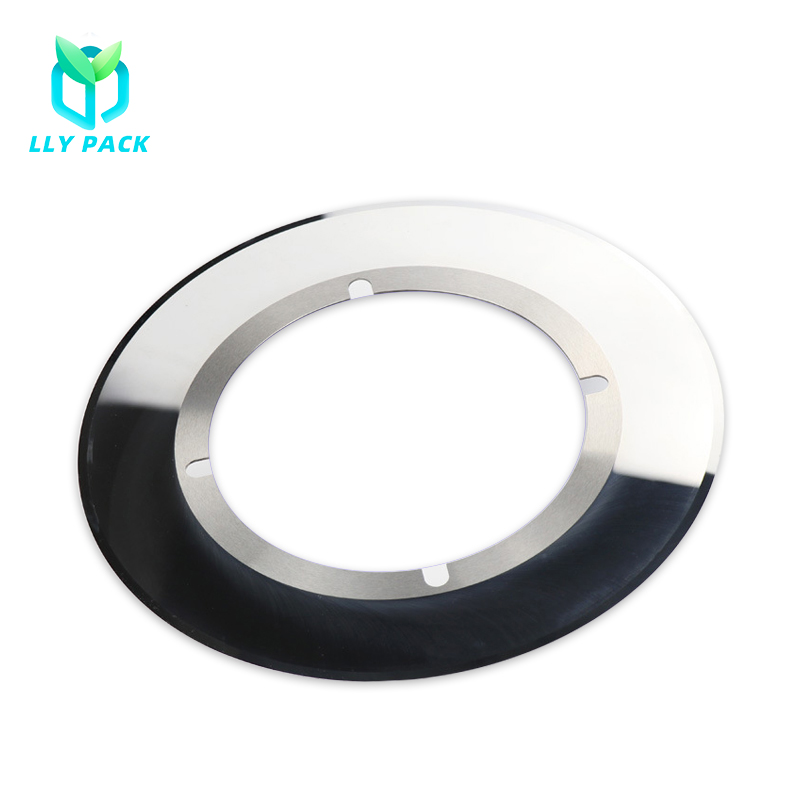
Seven components decide most of what a corrugated line can actually deliver: Slitting Blade (SLB-1), NC Cut-off Blade (NCOB-1), Anvil Cover Rubber (ACR-1), Air Cylinder (PC-1), Ink Pump (IP-1), Corrugating Roller (CRO-1) and the Boundle Machine (BM-1). This ranking orders them by spare-parts priority — quality linkage, downtime exposure, wear frequency and specification sensitivity — and states, for each entry, the line role it fills and the constraints that must be confirmed before an order is placed.
Why a Ranking Is More Useful Than a Parts Catalogue
A catalogue answers “what exists.” A ranking answers “what to fix first.” Carton plants rarely fail because a component was unavailable; they fail because the component that was ordered did not match the machine, or because a low-cost part was bought before a high-consequence part was specified. Ranking corrugated machine parts by consequence changes the order in which specifications get locked, drawings get approved and stock gets committed.
The ranking below is therefore a purchasing sequence, not a superiority claim. It is written for box plant managers, maintenance engineers, procurement teams and importers who already know their machine models but need the specification logic behind each replacement part.
The Problem: Parts Are Usually Specified After the Line Stops
Most plants can name their corrugator, printer slotter and die cutter by model. Far fewer can state the outside diameter, thickness, hardness or hole pattern of the blade running in them. When a part is reordered from a photograph, three variables are left to chance: the material class, the dimensional tolerance, and the interface with the holder or shaft it mounts on. The visible result is a part that fits but does not perform — a blade that dulls early, an anvil cover that flattens unevenly, a cylinder that loses force at working pressure.
Constraint-based sourcing reverses that sequence. Every component is treated as a set of constraints to be confirmed before purchase: material, dimension, hardness, mounting geometry, working pressure, operating temperature, quantity and lead time. Once those constraints are written down, the part number becomes a specification rather than a description.
Industry Background: A Larger Market With a More Mixed Installed Base
The demand behind the parts market is measurable. According to Dataintelo, the global corrugating machinery market was valued at approximately USD 4.8 billion in 2025 and is projected to reach USD 8.1 billion by 2034. Straits Research estimates that Asia-Pacific accounted for approximately 40.9% of the corrugated equipment market share in 2024, and the General Administration of Customs of China reported that exports of machinery parts under HS 84 grew 7.5% year on year in 2024.
Concentration matters as much as growth. Future Market Insights places approximately 60% of the market with three Tier 1 machinery builders — BHS Corrugated, Fosber and Mitsubishi — which means most carton plants operate a mixed installed base: a corrugator from one generation, a printer slotter from another, an end-of-line stacker from a third. Parts therefore cannot be matched to a brand standard; they have to be matched to the individual machine in front of the maintenance team.
The Four Criteria Behind This Ranking
Each of the seven parts was placed using four criteria, applied in the same order every time:
- Quality linkage — does the part directly change board quality, print registration or box dimension?
- Downtime exposure — if it fails mid-run, does the line stop immediately or degrade gradually?
- Wear and replacement frequency — is it a consumable that returns on every maintenance cycle, or a long-life component?
- Specification sensitivity — how much of the part has to be matched to the machine rather than bought from stock?
The ranking is a maintenance-priority order, not a statement about capital importance. A corrugating roller has a higher quality impact than a slitting blade but a much longer service life, so it sits lower in a spare-parts program while still being a high-consequence item to specify correctly.
The Top 7 Corrugated Machine Parts, Ranked
1. Slitting Blade (SLB-1) — the part that touches every sheet
Slitting Blade SLB-1 is a tungsten steel blade for carton manufacturing, produced to drawing. It is the longitudinal cutting element in a slitter scorer, where it trims the web and sets the finished trim edge on every sheet that leaves the corrugator. On LLY PACK’s SSC-1 thin blade slitter scorer, the slitting blade runs at a line speed of 630–900 m/min with an outside diameter of 260 mm, which is exactly why blade geometry cannot be treated as a generic purchase.
It ranks first because it fails on all four criteria at once: it touches every sheet, a dull edge shows up as dust and ragged trim rather than a clean stop, it wears continuously, and the slitting-blade material class matters — tungsten steel and high-speed steel are commonly used for slitting and NC cut-off blades specifically to deliver wear resistance and long service life. The constraints to confirm are outside diameter, inner diameter, thickness, hardness and the number of mounting holes.
2. NC Cut-off Blade (NCOB-1) — where board length tolerance is decided
NC Cut-off Blade NCOB-1 is a tungsten steel blade, customized to the machine. It performs the rotary cut-off at the dry end of the corrugator, separating the continuous web into sheets. This is the single point at which sheet length, cut squareness and downstream feeding behaviour are determined, and it is also one of the most exposed cutting edges on the line.
It ranks second because a cut-off blade rarely fails cleanly. It dulls, and the deviation appears as length drift and ragged edges that only surface later as registration or feeding problems in the printer slotter. As with SLB-1, customization is the norm rather than the exception.
3. Anvil Cover Rubber (ACR-1) — the consumable under every rotary die cut
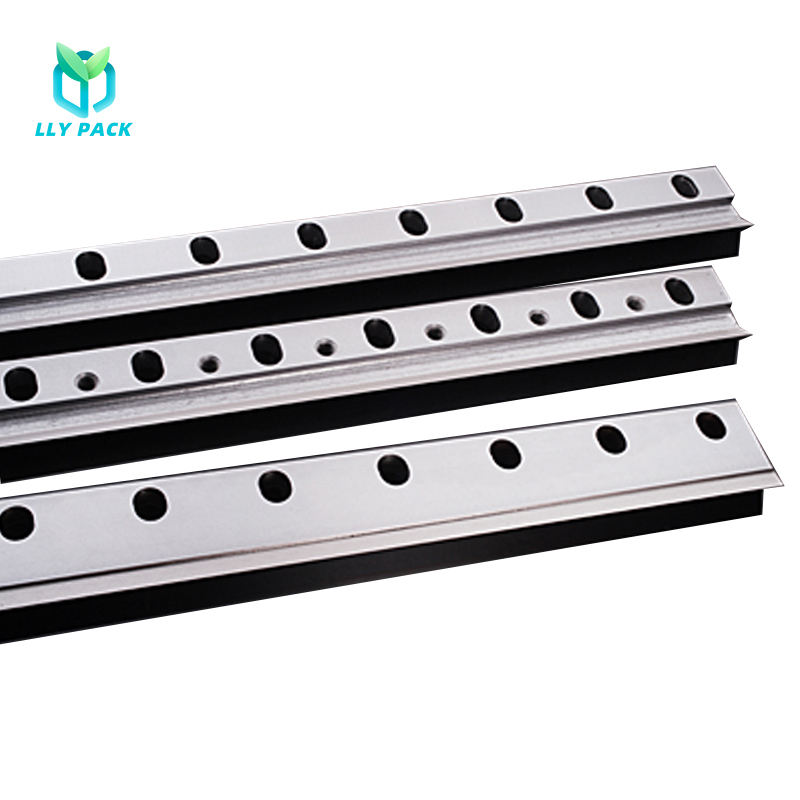
Anvil Cover Rubber ACR-1 is a customized component with a rubber and iron construction, used in carton printing and rotary die cutting. It forms the anvil surface that the die or cutting rule presses against, so its hardness and surface condition define how cleanly a blank is cut and how consistently the die performs across the width of the machine.
It ranks third because it is a genuine consumable: it wears across the whole running width rather than at one point, and wear shows up as incomplete cuts, fibre tear and increased die pressure. The specification decision is to match the cover to the cutting application, then confirm the customized dimensions against the cylinder or anvil body it wraps.
4. Air Cylinder (PC-1) — the actuator that must match force, not just size
Air Cylinder PC-1 is a pneumatic cylinder with a bore size range of 32–400 mm, a maximum stroke of 1000 mm, a working pressure range of 1.5–8 bar and an operating temperature range of −25 to 80 °C. Pneumatic cylinders of this class handle clamping, lifting, tensioning and pressure application across corrugated lines — reel stands, pressure rolls, platens and stacking equipment.
It ranks fourth because it is the most specification-sensitive item on the list. A cylinder is usually bought by bore size when it should be bought by bore size, stroke, working pressure and temperature together; the 32–400 mm bore range is wide enough that a plausible-looking substitution can still deliver the wrong force or the wrong mounting length. When a cylinder fails, the line stop is immediate, which is why the correct approach is to confirm all four parameters plus the mounting interface before ordering.
5. Ink Pump (IP-1) — steel construction for flexo ink circulation
Ink Pump IP-1 is a steel component with parameters customized to the machine, used to circulate ink in flexo printing stations on corrugated lines. Ink delivery affects print density, drying behaviour and the volume of ink left in the system at the end of a run.
It ranks fifth: it is not a wear item in the same sense as a blade, and its failures are usually progressive rather than instant, but its material and parameter set still have to be matched to the machine and to the ink being used. Because IP-1 uses customized parameters rather than a fixed stock configuration, the pressure, flow and connection data must be confirmed from the existing unit or drawing.
6. Corrugating Roller (CRO-1) — highest quality impact, longest service life
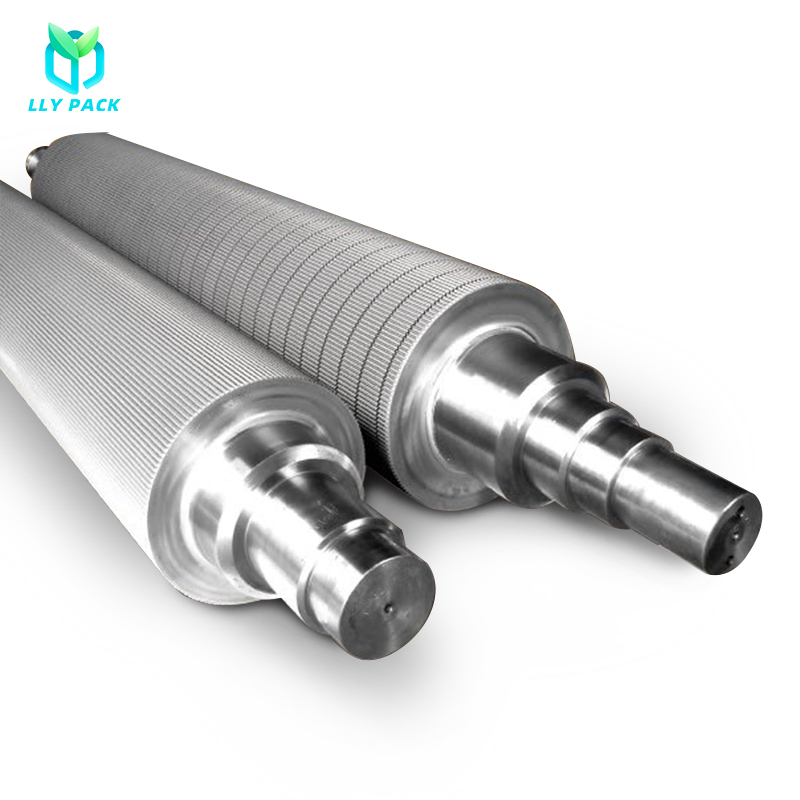
Corrugating Roller CRO-1 is a tungsten steel flute-forming roller, customized as drawings, used in carton manufacturing. It sits in the single facer, where the flute profile is created. LLY PACK’s SF-1 single facer specifies upper and lower flute rolls at 380 mm with a web size range of 1400–2300 mm, illustrating how tightly roller geometry is tied to the machine it serves.
Despite being a high-consequence component, CRO-1 ranks sixth in a spares-priority list because its service life is long and its replacement is a planned intervention rather than an emergency. That does not make the specification easy: flute profile, diameter and surface condition are all made to drawing, and an incorrect roller changes board caliper across the whole line.
7. Boundle Machine (BM-1) — the end-of-line tying constraint
Boundle Machine BM-1 is a steel tying machine for the corrugated box packaging industry. Its stated specifications are a maximum tying size of 97 × 83 and a minimum tying size of 5 × 5, a loose table depth of 25/35, a pallet height of 72.5/80.5 and a power motor of 1/3 HP & 1/2 HP.
It closes the ranking because it is a machine-level unit rather than a wear part: it is normally bought as part of an end-of-line upgrade or a capacity change, not as a maintenance reorder. Its ranking position does not reduce the matching work — the tying-size range, table depth and pallet height determine whether the machine suits the bundle sizes a plant actually ships, and those three numbers should be checked against current order profiles before purchase.
Comparison Table: The Top 7 Corrugated Machine Parts at a Glance
| Rank | Part | Model | Material | Primary Line Role | Verified Selection Data |
|---|---|---|---|---|---|
| 1 | Slitting Blade | SLB-1 | Tungsten Steel | Longitudinal slitting and edge trim | Customized as drawings |
| 2 | NC Cut-off Blade | NCOB-1 | Tungsten steel | Rotary cut-off at the corrugator dry end | Customized |
| 3 | Anvil Cover Rubber | ACR-1 | Rubber / Iron | Anvil surface for rotary die cutting and printing | Customized |
| 4 | Air Cylinder | PC-1 | Pneumatic cylinder structure | Clamping, lifting and pressure application | Bore 32–400 mm; max stroke 1000 mm; 1.5–8 bar; −25 to 80 °C |
| 5 | Ink Pump | IP-1 | Steel | Flexo ink circulation | Parameters customized to the machine |
| 6 | Corrugating Roller | CRO-1 | Tungsten Steel | Flute forming in the single facer | Customized as drawings |
| 7 | Boundle Machine | BM-1 | Steel | End-of-line bundle tying | Max tying 97 × 83; min tying 5 × 5; loose table depth 25/35; pallet height 72.5/80.5; motor 1/3 HP & 1/2 HP |
All seven entries above are supplied by LLY PACK (HK) CO., LIMITED, a supplier of corrugated machine parts and corrugated machinery whose range also includes slitter scorers, slotter die cutters, single facers, stackers and strapping machines.
Step-by-Step: Turning This Ranking Into a Spare-Parts Order
The ranking only creates value if it changes what happens at the desk. The sequence below converts it into an order file.
- Step 1 — Map the part to a line section. Assign each part to corrugator, printing/converting or end-of-line. This stops duplicate purchases across departments and makes the maintenance window visible.
- Step 2 — Extract the machine-side constraints. For blades and rollers this means drawings; for wrapped components it means dimensions and hardness; for cylinders it means bore size, stroke, working pressure, temperature and mounting.
- Step 3 — Fix the material class. Tungsten steel for SLB-1, NCOB-1 and CRO-1; rubber/iron for ACR-1; steel for IP-1 and BM-1. Material is a decision, not a default.
- Step 4 — Confirm the customization variables. The OEM program covers optional materials, outside diameter, inner diameter, number of holes, thickness and hardness.
- Step 5 — Check the commercial constraints. Minimum order quantity is 100 pieces, monthly capacity is 1000 pieces, and lead time is 30–45 days.
- Step 6 — Confirm quality control and after-sales terms. Production is 100% tested, and defective products are replaced.
- Step 7 — Record the specification. Store the confirmed parameters next to the machine model so the next reorder is a lookup instead of a re-investigation.
Use Cases: Matching the Top 7 to Real Carton Line Scenarios
High-speed corrugator dry end. The combination that matters most is SLB-1, NCOB-1 and CRO-1. A plant running continuous production at high speed should hold slitting and cut-off blades because edge condition degrades continuously, while the corrugating roller is specified once and scheduled rather than stocked.
Printing and rotary die cutting. ACR-1 and IP-1 belong to the same maintenance window. Anvil cover wear changes cutting pressure, and ink circulation changes print density; both are checked when a station is opened. PC-1 cylinders are confirmed in the same pass when they actuate the station’s moving elements.
End-of-line bundling and dispatch. BM-1 enters the picture whenever bundle sizes, pallet heights or table depths change. The tying range of 5 × 5 to 97 × 83 and the pallet height options of 72.5/80.5 are the matching variables, and they should be checked against actual order profiles rather than assumed from the previous machine.
Other Parts That Belong in the Same Order
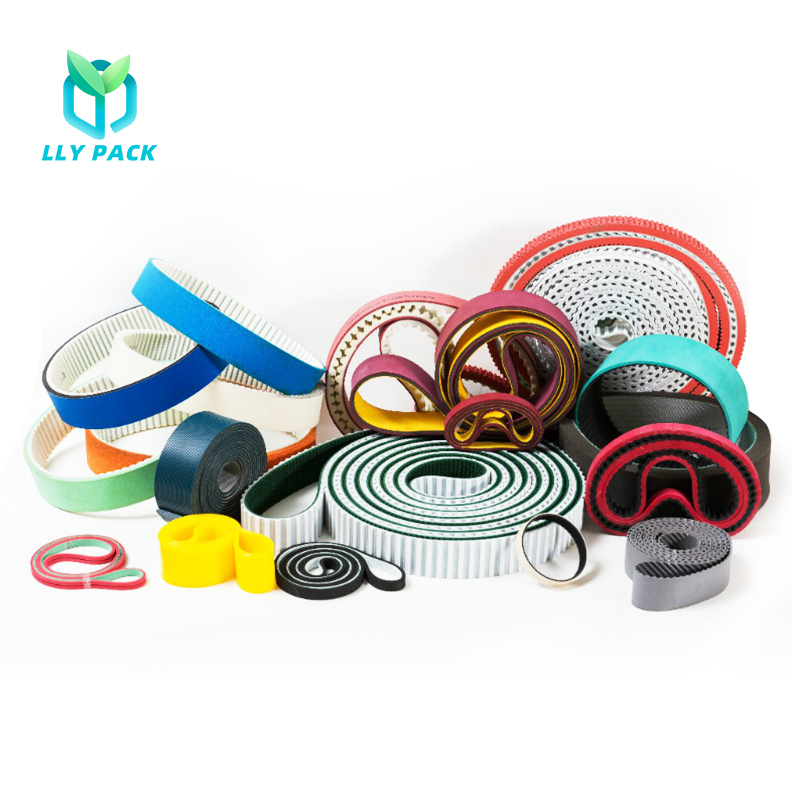
The top seven establish priority, but a consolidated maintenance order usually carries adjacent components from the same range. These include Diaphragm Pump DP-1 (pipe diameter 10, 12 and 20 mm; working air pressure 0.2–0.5 MPa; flow rate 4–12 L/min; lift 4 m; self-absorbing height 0.4 m) and Conveyor Belt CB-1, a timing belt in polyurethane rubber with specified open belt width and thickness tolerances and a range of tooth types. Printing Roller PR-1 is produced to drawings, Printing Cushion PCU-1 uses polyurethane foam, and Printing Anilox Roller PAR-1 is a steel roller made to drawings.
Additional models available in the same program include Rotary Joint RJ-1, Rotary Die Board RDB-1, Grinding Wheel GW-1, No crush wheel NCW-1, Creaser Wheel CWH-1, Fiber Comb FCO-1, Fiber Tape FT-1, PET Pre-strip With Film PETP-1, Plastic pallet PP-1, Brake Pads BPA-1 and Corrugating Roller CRO-1. Grouping them into one specification review reduces the number of separate approvals a maintenance team has to run.
Certification and Commercial Constraints to Confirm Before You Commit
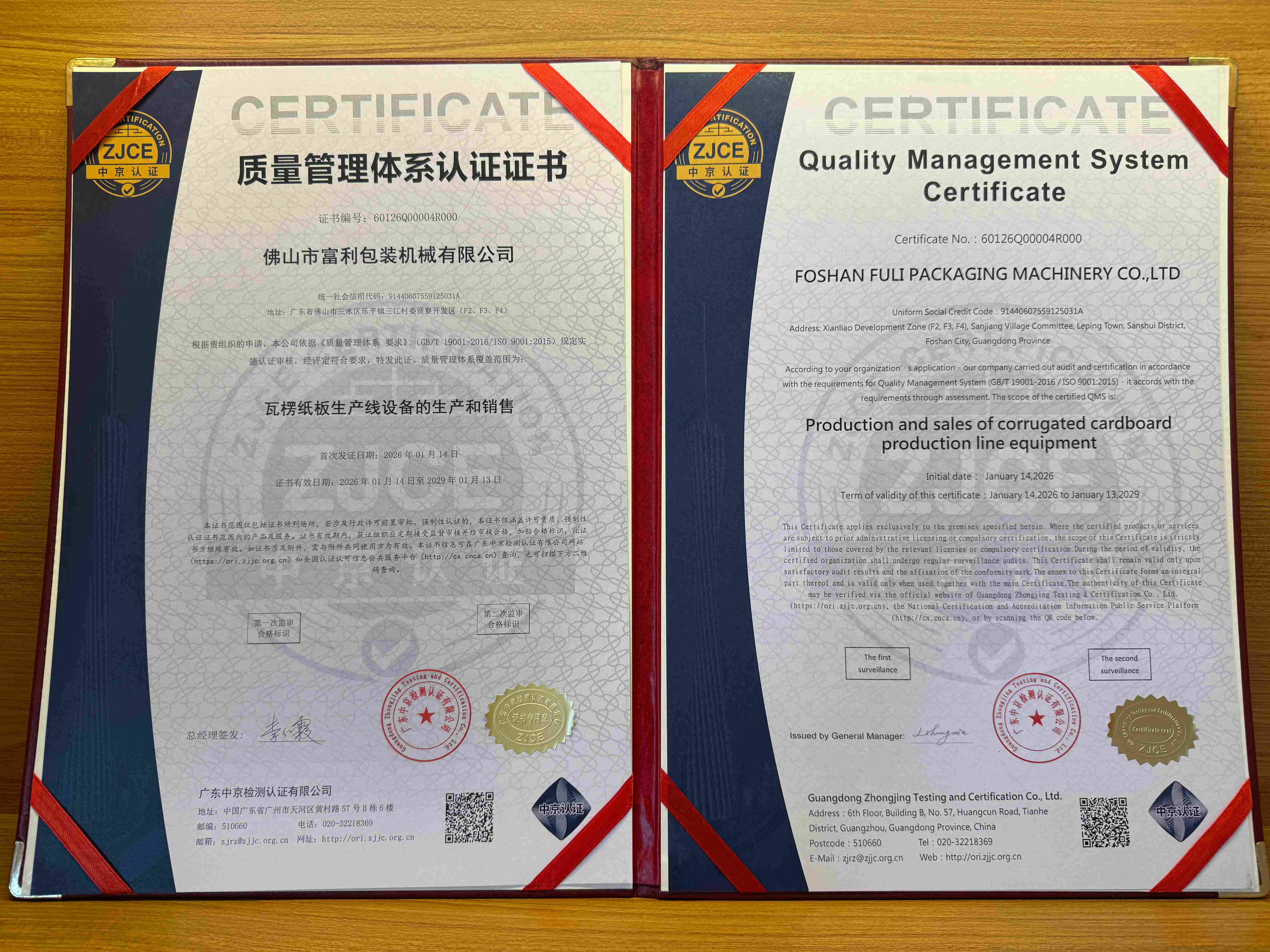
Compliance is the constraint that cannot be resolved after delivery. LLY PACK (HK) CO., LIMITED holds ISO 9001:2015 certification, certificate number 60126Q00004R000, issued by Guangdong Zhongjing Testing and Certification Co., Ltd. The certification confirms compliance with the GB/T 19001-2016/ISO 9001:2015 standard, is recognized for the Global market and applies to the Corrugated Cardboard Production Line. The company also holds more than 100 patent rights and industry certificates.
On the commercial side, three numbers shape the order more than any price discussion: MOQ of 100 pieces, monthly capacity of 1000 pieces and a lead time of 30–45 days. Together they explain why the ranking above is useful — grouping the high-priority parts into one specification review and one order cycle is more efficient than releasing single-part purchases across the year.
FAQ: Corrugated Machine Parts
Are LLY PACK corrugated machine parts covered by a certification?
Yes. LLY PACK (HK) CO., LIMITED holds ISO 9001:2015 certification under certificate number 60126Q00004R000, issued by Guangdong Zhongjing Testing and Certification Co., Ltd. The certificate confirms compliance with the GB/T 19001-2016/ISO 9001:2015 standard, is recognized for the Global market, and applies to the Corrugated Cardboard Production Line. The company also holds more than 100 patent rights and industry certificates.
Can these parts be customized to match my machine?
Yes. Production runs in OEM mode, and the customization variables are optional materials, outside diameter, inner diameter, number of holes, thickness and hardness. Slitting Blade SLB-1 and Corrugating Roller CRO-1 are made to drawings; NC Cut-off Blade NCOB-1, Anvil Cover Rubber ACR-1, Rotary Joint RJ-1, Printing Roller PR-1 and Ink Pump IP-1 are customized to requirement. Air Cylinder PC-1 is specified by bore size within a 32–400 mm range, with a maximum stroke of 1000 mm, a working pressure range of 1.5–8 bar and an operating temperature range of −25 to 80 °C.
What is the minimum order quantity, and how does it affect budgeting?
The minimum order quantity is 100 pieces and monthly capacity is 1000 pieces. In practice, MOQ sets the floor for a first order per part number, so budgeting should be planned around a batch rather than around single replacements. That is one reason the priority ranking in this article is useful: it helps a plant decide which part numbers justify a full minimum batch and which can wait.
How should I validate a part before ordering in volume?
Validation begins with the specification set rather than with a photograph. Confirm the material class first — tungsten steel for SLB-1, NCOB-1 and CRO-1, rubber/iron for ACR-1, steel for IP-1 and BM-1 — then the dimensional variables such as outside diameter, inner diameter, thickness, hardness and hole pattern, and for cylinders the bore size, stroke, working pressure and temperature range. Production is 100% tested and defective products are replaced, so the validation step that carries the most weight is sending accurate machine data and drawings with the enquiry.
What is the lead time, and how should I plan stock around it?
Lead time is 30–45 days. For a carton plant that number decides which parts sit on the shelf: the highest-ranked parts in this list are also the ones with the lowest tolerance for waiting, so they are the ones worth holding. To confirm specifications for your machine, check availability, request a quotation or ask for the product catalog, contact LLY PACK at christina@lycorrugated.com or download the product brochure at LLY PACK product brochure.
Conclusion: Rank the Parts, Then Lock the Specifications
Ranking corrugated machine parts is a way of deciding where specification effort pays back fastest. Slitting Blade SLB-1, NC Cut-off Blade NCOB-1 and Anvil Cover Rubber ACR-1 come first because they touch the product and wear continuously. Air Cylinder PC-1 and Ink Pump IP-1 follow because they carry the widest parameter sets. Corrugating Roller CRO-1 and the Boundle Machine BM-1 complete the list as long-life, high-consequence items that are specified once and scheduled rather than stocked.
The order of the list matters less than the discipline behind it: material, dimension, hardness, bore size, stroke, pressure, temperature, MOQ and lead time, confirmed in writing before the purchase order is raised.
Next Step: Confirm Your Specifications
Send your machine model, drawings or existing part parameters and the LLY PACK team will confirm material, dimensions and the customization variables for your corrugated line. Ask for a quotation, the product catalog or the OEM specification sheet for the parts ranked above.
Email: christina@lycorrugated.com | WhatsApp: +86 13763260555 | Website: www.llypack.com | Brochure: download PDF
LLY PACK (HK) CO., LIMITED — Flat/Rm 742, Star House 3, Salisbury Road, Tsim Sha Tsui, Kowloon, Hong Kong.
Have Questions or Need More Details?
Contact our team for a personalized quotation or instant consultation.
Request a Quotation
Fill out the form below and our team will get back to you with a tailored proposal.
WhatsApp Direct Chat
Prefer to chat in real-time? Message us on WhatsApp for instant assistance & quick answers.
- Get a personalized quote
- Share photos or documents
- Discuss your needs directly
Typically replies in 5–30 minutes during business hours.