
Verifying Build Quality: Steel Construction and Weight in Corrugated Cardboard Machines
Three physical facts separate a durable corrugated cardboard machine from a persuasive quotation: what the frame is made of, how much the machine actually weighs, and how large its structure is. Steel grade and plate thickness decide how the frame behaves under continuous corrugating loads. Net weight, read inside one machine class, shows how much material is really in the shafts, bearings and ribs. Overall dimensions reveal the structural span the design has to hold rigid. Buyers who ask for these three numbers, and then check them against drawings, gain a fast, low-cost screen for engineering seriousness before committing to a factory audit.
Short answer: build quality is verified from measurable physical evidence, not from adjectives. Request (1) the structural material declaration with plate thickness, (2) the net and shipping weight of the exact configuration, and (3) the general arrangement drawing with overall dimensions. Compare each figure only against machines of the same function and working width.
Why Durability Disappears From the Specification Sheet
A specification sheet answers throughput questions. It lists maximum mechanical speed, working width, flute combinations and layer count. It almost never answers the durability question, which is whether the machine will still hold tolerances after two or three years of shift work.
The consequence is visible in procurement: two quotations can look numerically similar while the physical machines differ in the mass of steel in the side frames, the size of the shafts, the quality of the machined mating surfaces, and the stiffness of the structure that carries the corrugating rolls and the double facer. Paper cannot show that difference. Weight, material and dimensions can.
Typical symptoms of an under-built frame appear after commissioning rather than at acceptance: vibration that grows as line speed rises, uneven belt tracking on the double facer, glue unit drift, gear noise that changes with load, and side frames that move after foundation settling. Each of these traces back to stiffness, mass distribution or machining accuracy, which are all decided long before shipment.
What Changed in the Corrugated Machinery Market
Automation is now the default expectation rather than a premium. Automatic corrugated machines accounted for 55.6% of the global market share by automation level as of 2026, according to Future Market Insights research published in October 2026. As automated lines become the standard configuration, differentiation shifts from “automatic versus manual” to how well a specific automatic line holds stability over its service life.
The headline number buyers use to compare lines is maximum mechanical speed. That number is useful for capacity screening but insufficient for procurement decisions: maximum mechanical speed is not the same as sustained saleable output, and it is normally quoted without substrate, flute or board-quality conditions. Two lines quoting the same speed can therefore deliver very different real throughput, and the physical build is a large part of the reason.
Against that background, experienced buyers have moved part of their due diligence to factory-floor evidence: plate thickness, net weight per working width, machining route, and a pre-shipment test that records what was actually measured. This article sets out how to do that systematically.
The Three Physical Indicators, Explained
1. Steel construction is the load path
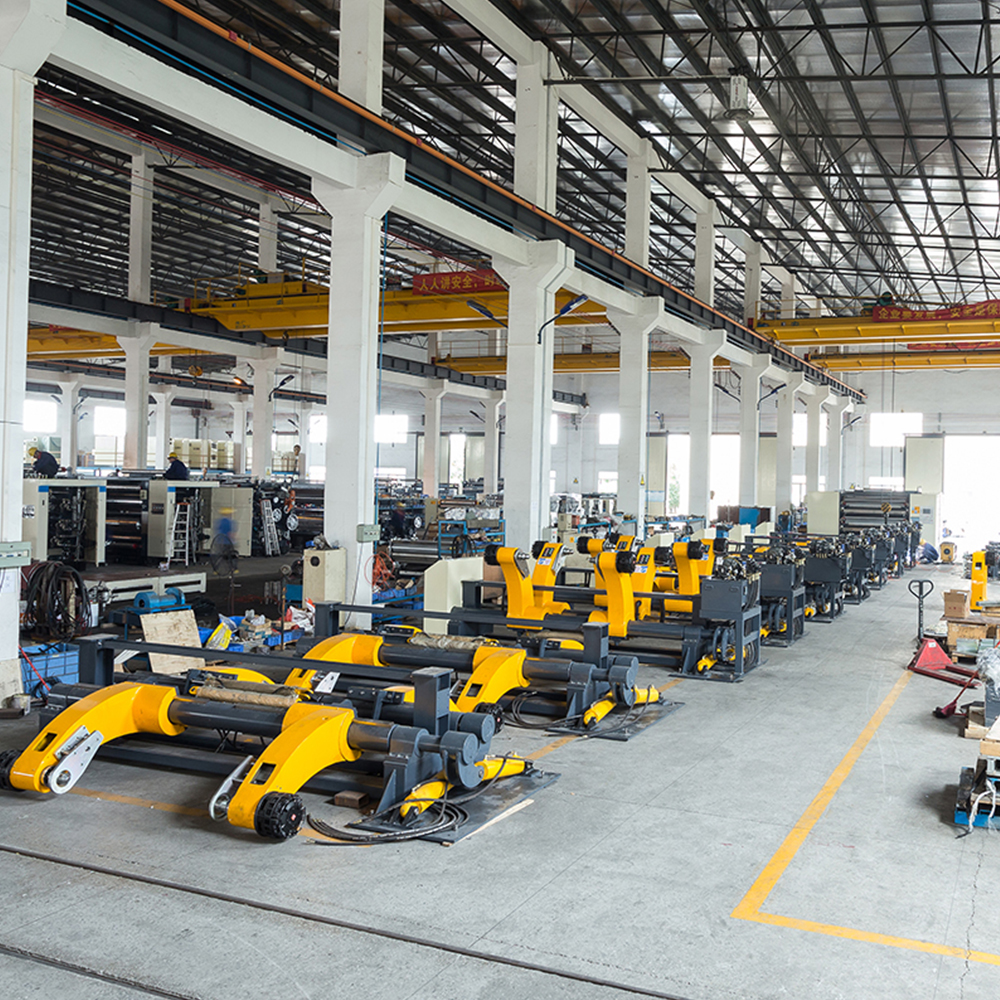
Every dynamic force in a corrugated line passes through the frame. Corrugating roll pressure at the single facer, belt tension at the double facer, and the torque of the drive train all resolve into the base beams and side frames. A frame built from thicker plate with adequate ribbing distributes those forces over more material and deflects less. A frame built from thinner folded sheet saves cost and weight, and behaves differently once the line runs continuously.
Material alone is not enough. The processing sequence matters as much as the grade. Welding introduces local stress; frames that are stress-relieved and then machined after welding hold their geometry, while frames machined before welding can move. Buyers should therefore ask two questions, not one: which steel, and in what order was it cut, welded, relieved and machined.
2. Net weight is a proxy that only works inside one machine class
Net weight measures material content. Inside a single machine class, a higher net weight generally indicates thicker plates, heavier shafts, larger bearings and more internal ribbing, which is why weight correlates with stability and with the ability to absorb vibration. That logic breaks the moment machines of different function or size are placed side by side.
Published net weights across the LLY PACK range illustrate the point: the SSC-1 is listed at 4000 KG and the STM-1 at 500 KG. The gap reflects different machine function and size, not an eight-fold difference in engineering quality. A 500 KG machine is not a worse machine than a 4000 KG machine; it is a different machine. The comparison rule is therefore to normalise weight by function and by working width before drawing any conclusion.
3. Dimensions show the structural span and the footprint
Overall dimensions do two jobs. First, they define the structural span the design must hold rigid: a taller frame carries roll handling loads higher above the floor, and a longer frame carries more stations and more roll diameter over the same base. Second, dimensions determine whether the machine fits the plant at all, including floor loading, anchor plan, crane access and container loading for shipment.
A documented example is the SF-1, listed at 5900 × 2300 × 2800 mm. Read against the LLY PACK corrugated line offering, which covers production-line widths of 1400–2800 mm, those dimensions let a buyer check the machine against the building before discussing price.
4. The process evidence behind the numbers
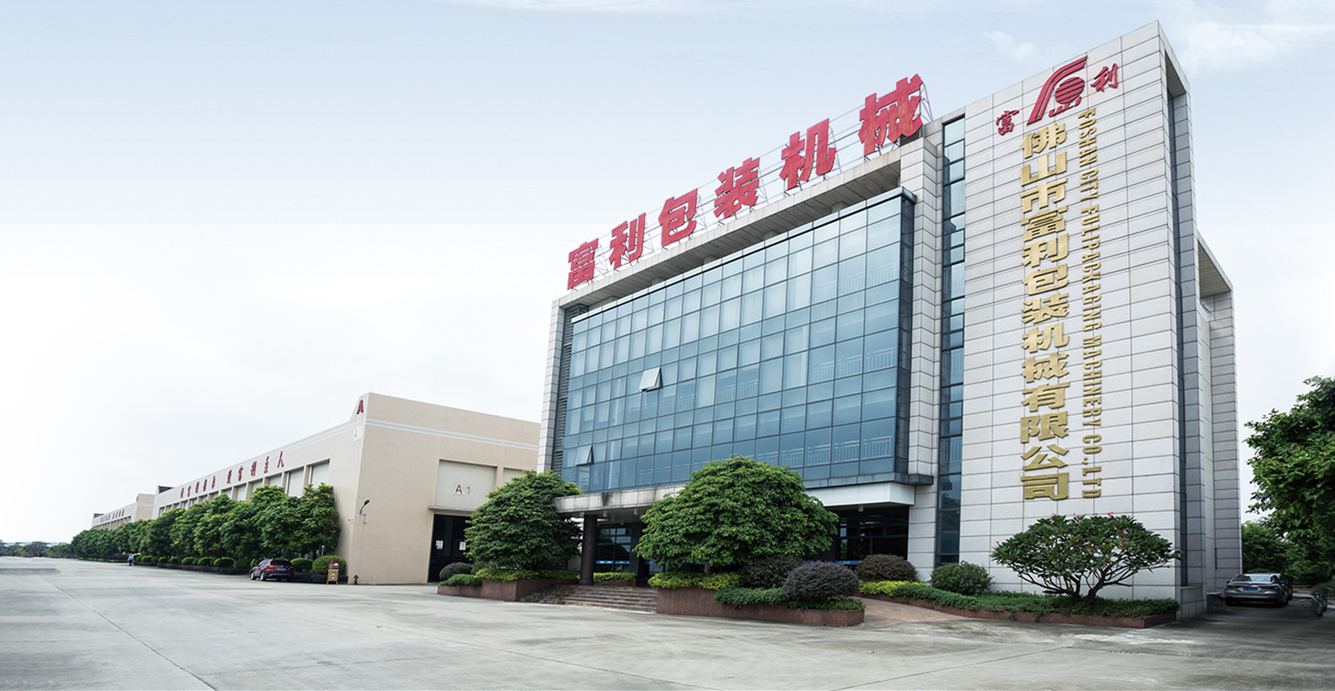
Numbers are only credible if the supplier can machine to them. LLY PACK (HK) CO., LIMITED is a Hong Kong registered company whose manufacturing base is located in Foshan City, Guangdong Province, China. The company builds corrugated cardboard production lines and also supplies single facers, corrugating rolls, double facer belts, slitting blades and printer slotter die cutters, along with corrugated belts and auto splicers.
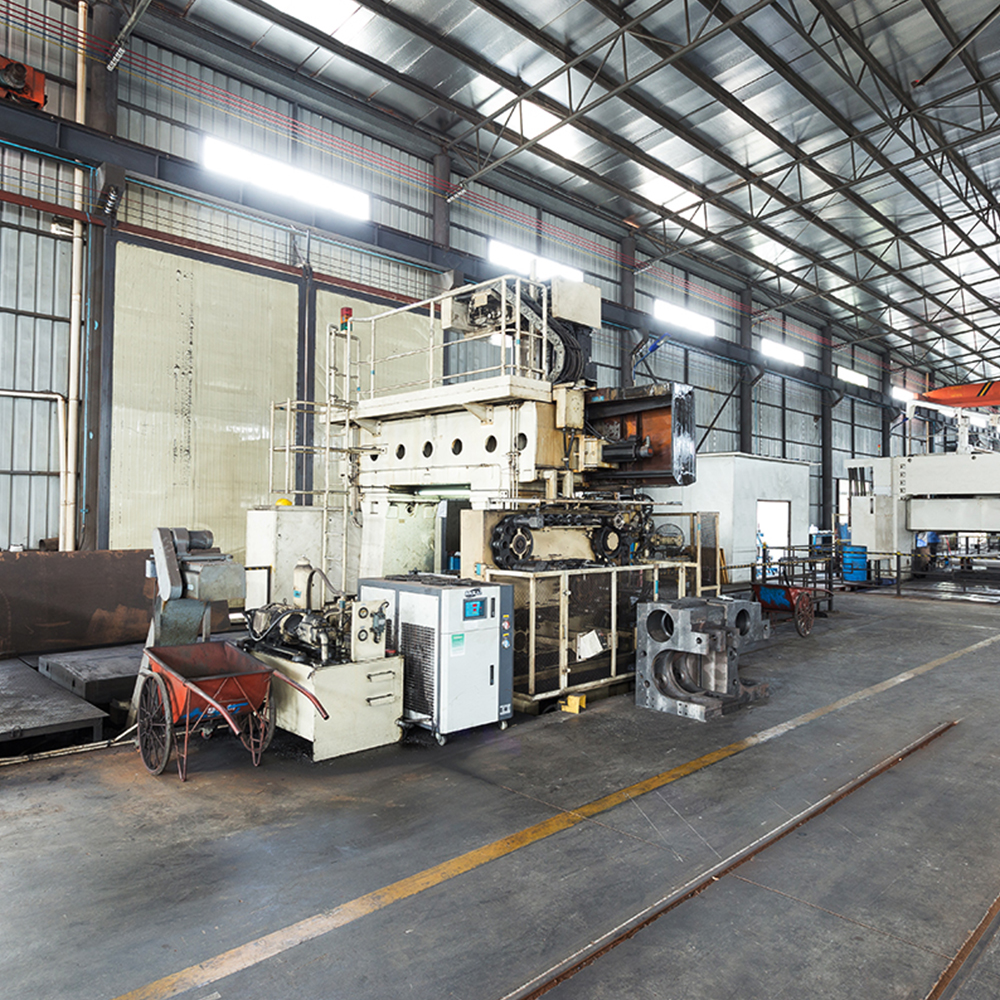
Machining capacity is part of the physical evidence. LLY PACK operates four sets of advanced CNC centres from Japan, including a computer-controlled five-face machining centre, which the company uses to hold high-precision processing on large structural and roller components. Quality management is certified under ISO 9001:2015, certificate number 60126Q00004R000, valid until 13 January 2029. For context on scope, the company reports corrugated lines from 2 to 9 layers, more than 3500 successful line installations, and exports to more than 40 countries.
Step-by-Step: How to Verify Build Quality Before You Commit
- Request the structural material declaration. Ask for the steel grade and plate thickness used in side frames, base beams and roll housings, stated per part rather than as a single headline. A supplier who can answer this has drawings; one who cannot is quoting from a template.
- Ask for net weight and shipping weight of the exact configuration. Configuration changes weight. Insist the figure refers to the model, layer count and working width in your quotation, not to a catalogue average.
- Normalise the weight. Divide net weight by working width and compare only within the same machine class. A machine at the top of a 1400–2800 mm width range is not comparable with one at the bottom.
- Check dimensions against the building. Use the general arrangement drawing to confirm floor loading, anchor positions, maintenance clearance and lifting access. Confirm the shipping split while you are there, since large frames are usually shipped in sections.
- Verify the machining route. Ask which CNC centre performs each critical operation, whether the frame is machined after welding, and what inspection follows each operation. The answer should name a machine and a sequence.
- Fix the acceptance criteria in writing. LLY PACK states a pre-shipment test as its acceptance criterion, with a minimum order quantity of one set, delivery terms of FOB, CIF, EXW or DAP, and T/T payment terms. Add the physical checks you want recorded: measured plate thickness, measured net weight, and photographs of weld and machined areas before crating.
- Plan the wear path at the same time. Build quality sets the ceiling on service life, but wear parts decide where downtime starts. Ask for the wear-part schedule for corrugating rolls, double facer belt and bearings, and confirm the supplier can supply replacements to the original tolerance.
Where These Indicators Matter Most
High-speed lines running near rated speed
A line quoted at 300 m/min maximum mechanical speed spends its working life trying to hold that band. Vibration and resonance scale with speed, so mass and stiffness in the frame become the practical limit on usable output rather than the motor rating. Buyers targeting the upper part of a speed range should weight frame evidence more heavily than buyers running well below it.
Multi-layer and heavy-board production
LLY PACK supplies corrugated lines from 2 to 9 layers. Higher layer counts increase roll loads and board weight through the machine, which raises the demand on base beams, bearings and the double facer structure. On 5-ply and above, the frame is carrying load continuously rather than occasionally, and the difference between a stiff frame and a light one shows up as maintenance frequency.
Wide-web configurations
Within a 1400–2800 mm width range, the working width roughly doubles from one end to the other. Roll deflection rises steeply with width, so the heaviest roll bodies, shafts and bearing housings sit at the wide end. Comparing a quotation for a 1400 mm line with one for a 2800 mm line without normalising weight will mislead in both directions.
Distributors building a long-term catalogue
For importers and distributors, build quality is a resale asset. A machine whose frame holds geometry is easier to support in the field, easier to supply parts for, and easier to reference when selling the next unit. Distributors should therefore record the physical specification of each model they sell — weight, dimensions, plate thickness — as part of their own product data, not only as a supplier claim.
Comparison Table: What Each Physical Indicator Proves
| Physical evidence | What it indicates | What to request from the supplier |
|---|---|---|
| Primary structural material and plate thickness | Stiffness of the load path and vibration behaviour of the frame | Material declaration naming grade and thickness for side frames, base beams and roll housings |
| Net weight, same machine class only | How much material sits in plates, shafts, bearings and ribbing | Net weight and shipping weight for the exact model, layer count and working width |
| Overall dimensions (L × W × H) | Structural span, station count, footprint and logistics fit | General arrangement drawing with anchor plan and floor-loading data |
| Machining route | Flatness and alignment of mating surfaces; roller parallelism | Which CNC centre performs each critical operation and what inspection follows |
| Wear-part and monitoring plan | Long-term serviceability and where downtime risk concentrates | Wear-part schedule, advance replacement policy, digitised monitoring scope |
Documented model figures from the LLY PACK range, published as listed:
| Model | Published figure | Unit |
|---|---|---|
| SSC-1 | 4000 | KG net weight |
| STM-1 | 500 | KG net weight |
| SF-1 | 5900 × 2300 × 2800 | mm overall dimensions |
What the Numbers Do Not Prove
Physical evidence narrows the field; it does not close the purchase. Weight cannot confirm sustained output, energy consumption, waste rate or changeover time, and no buyer should treat a mass figure as a performance guarantee. Likewise, dimensions confirm fit and span but say nothing about control logic or operator interfaces.
Two further limits are worth stating openly. First, material declarations are self-reported unless verified at a factory audit or witnessed during the pre-shipment test. Second, service life depends on installation quality, foundation condition and the wear-part regime as much as on the frame. LLY PACK's stated control method for equipment operation risk is to check regularly whether equipment is operating normally, replace key equipment and wear parts in advance, and apply digitised monitoring wherever possible. That is a maintenance policy, not a durability guarantee, and buyers should treat it as one input among several.
FAQ
What documents should a buyer request to verify build quality on a corrugated cardboard machine?
Ask for three items: a quality management certificate, a structural material and process declaration for the frame, and the acceptance criteria that will be applied at pre-shipment test. LLY PACK production lines are certified under ISO 9001:2015, certificate number 60126Q00004R000, valid until 13 January 2029, and the company states a pre-shipment test as its acceptance criterion. A declaration that names steel grade, plate thickness and the machining sequence after welding is more useful than a general quality statement.
Can a supplier prove machining accuracy before the machine is shipped?
Only if the supplier owns the machining capacity. LLY PACK operates four sets of advanced CNC centres from Japan, including a computer-controlled five-face machining centre, which the company uses to hold high-precision processing on large components. Buyers should ask which machine performs each critical operation and what inspection follows, rather than accepting a general accuracy claim. A named machine and a named inspection step are verifiable; an adjective is not.
Does a heavier machine always cost more?
Weight is not a price list. Inside one machine class, more steel, larger shafts and heavier bearings usually raise both material cost and stability under load. Across classes, weight mostly reflects function: published net weights in the LLY PACK range run from 4000 KG for the SSC-1 to 500 KG for the STM-1. The useful budget comparison is cost per unit of working width and per output band, not price per kilogram.
Can buyers inspect or test the machine before shipment?
Yes, within the supplier's stated terms. LLY PACK lists a minimum order quantity of one set, delivery terms of FOB, CIF, EXW or DAP, T/T payment terms, and a pre-shipment test as the acceptance criterion. For a build-quality review, ask to witness the pre-shipment run, record measured plate thickness and net weight against the drawing, and photograph weld and machined areas before crating.
How do steel and weight affect long-term parts supply and service life?
A stiff, well-machined frame reduces vibration-driven wear on corrugating rolls, bearings and the double facer belt, which is where unplanned stoppages usually start. LLY PACK's stated approach is to check equipment operation regularly, replace key equipment and wear parts in advance, and implement digitised monitoring wherever possible. Buying the line and its wear parts — corrugated belt, corrugating roll, single facer, auto splicer — from the same source keeps tolerances consistent across the service life. To review plate thickness data, the wear-part list and the model range in one document, download the LLY PACK brochure below, or send your working width and layer count for a quotation.
Conclusion
Build quality in a corrugated cardboard machine is a physical property, and physical properties can be asked for. The steel grade and plate thickness show whether the frame was designed as a load path. The net weight shows how much material actually went into the machine, provided it is read inside the correct machine class. The dimensions show the structural span the design must hold, and whether the machine fits the building at all. Together they form a screening test that costs a buyer nothing but two emails, and they filter out quotations that were never engineered to survive continuous operation.
The next step is documentary. Ask every shortlisted supplier for the same three figures for the exact configuration, then compare them within class. Suppliers who answer precisely are usually the ones whose machines hold tolerance.
Request LLY PACK build data and a line quotation
LLY PACK (HK) CO., LIMITED manufactures corrugated cardboard production lines, single facers, corrugating rolls, double facer belts and auto splicers at its base in Foshan City, Guangdong Province, China. Send your working width, layer count and target speed to receive model-level weight, dimension and plate data alongside a quotation.
Download the catalogue: LLY PACK product brochure (PDF)
Website: www.llypack.com
Contact: Christina · christina@lycorrugated.com · WhatsApp +86 13763260555
Address: Flat/Rm 742, Star House 3, Salisbury Road, Tsim Sha Tsui, Kowloon, Hong Kong

Have Questions or Need More Details?
Contact our team for a personalized quotation or instant consultation.
Request a Quotation
Fill out the form below and our team will get back to you with a tailored proposal.
WhatsApp Direct Chat
Prefer to chat in real-time? Message us on WhatsApp for instant assistance & quick answers.
- Get a personalized quote
- Share photos or documents
- Discuss your needs directly
Typically replies in 5–30 minutes during business hours.