
Anilox Roller vs. Ceramic Coated Roller: Which One Fits Your Corrugated Line?
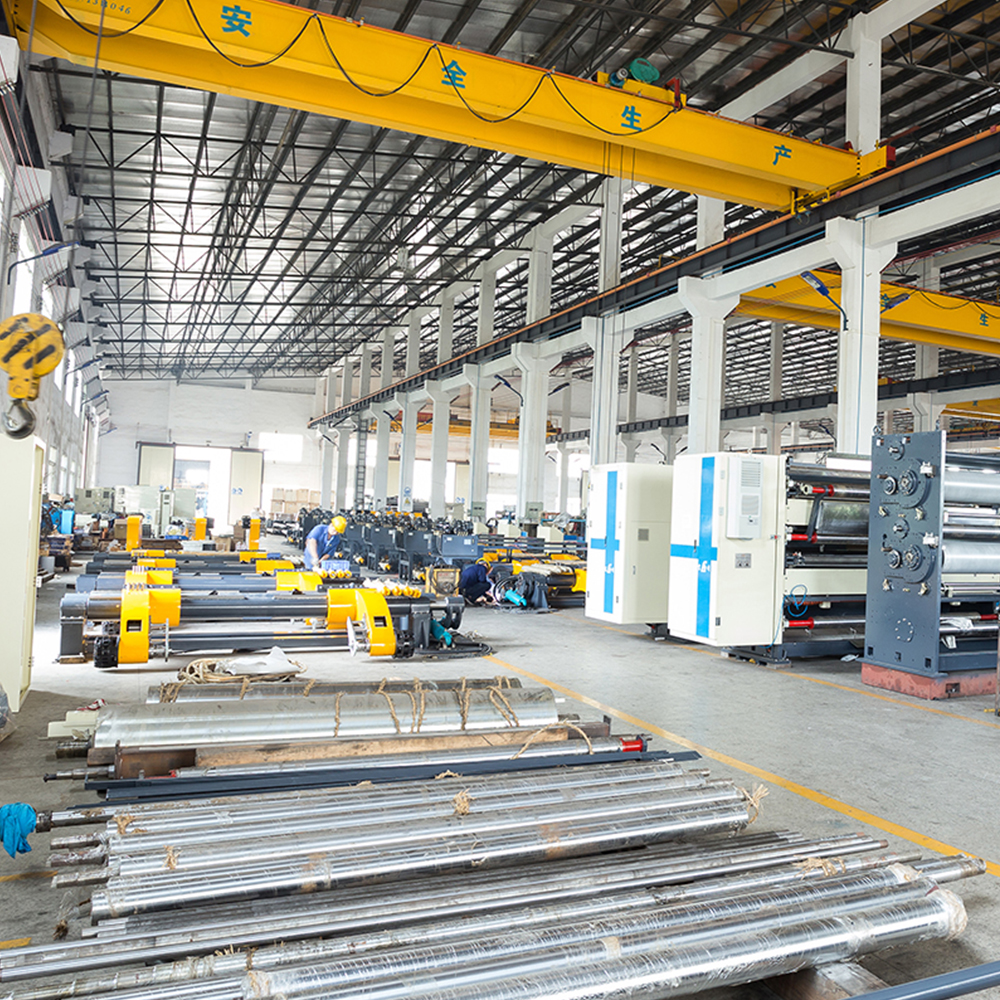
Anilox Roller vs. Ceramic Coated Roller: Which One Fits Your Corrugated Line?
For box plants that print directly on corrugated board, the roller that meters ink is one of the most influential consumables in the print station. Both a printing anilox roller and a ceramic coated roller are common in flexographic printing units, but they are not always interchangeable in terms of wear behavior, ink transfer consistency, or long-term maintenance. This comparison guide is written for buyers evaluating corrugated machine parts and focuses on how to choose the right roller type for a specific corrugated line.
Why Roller Selection Matters on a Corrugated Line
Roller problems often appear as print quality issues before they are recognized as parts problems. Operators may see heavier color on one side, lighter bands, streaking, or a gradual change in ink density over a shift. When the roller surface wears, the cells that carry ink lose their intended shape and volume. That changes how much ink is released to the printing plate and, ultimately, to the board.
In a corrugated plant, the comparison between an anilox roller and a ceramic coated roller is therefore not simply a product-type preference. The choice affects how often the component must be replaced, how stable color remains during long runs, and how much routine attention the printing section needs. Buyers must also consider whether the replacement part can be supplied with the required dimensions and quality controls for an OEM or aftermarket order.
Industry Background: Growing Demand for Reliable Corrugated Line Components
The corrugating machinery market was valued at approximately USD 4.8 billion in 2025 and is projected to reach USD 8.1 billion by 2034, according to Dataintelo. Asia-Pacific dominated the corrugated equipment industry, accounting for about 40.9 percent of the market share in 2024, according to Straits Research. As corrugated packaging demand keeps production lines busy, replacement components such as printing cylinders, doctor blade assemblies, and metering rollers attract more attention from maintenance teams and production managers.
China is also a major source of machinery parts. China's exports of machinery parts under HS 84 showed year-on-year growth of 7.5 percent in 2024, reaching more than USD 2.1 trillion for the broader category, according to the General Administration of Customs of China. This creates a larger pool of supply options, but it also means buyers need clearer evaluation criteria before selecting corrugated machine parts.
Anilox Roller vs. Ceramic Coated Roller: What Is the Difference?
There is sometimes confusion about these two terms. An anilox roller is a metering roller used in flexographic printing. It accepts ink from a chambered doctor blade or ink pan and transfers a controlled volume of ink to the printing plate. In corrugated box production, a printing anilox roller performs the same function inside a printer-slotter, flexo folder-gluer, or other inline printing section.
A ceramic coated roller is a roller whose outer working surface has a ceramic layer. In modern anilox roller construction, this ceramic layer is often the surface that carries the engraved cell pattern. The word “ceramic coated” therefore describes the surface technology, while “anilox roller” describes the function. When corrugated machine parts buyers compare “anilox roller vs. ceramic coated roller,” they are usually comparing a conventional metal or plated metering roller with a roller that uses a ceramic-coated working surface.
LLY PACK, a supplier of complete corrugated lines and corrugated machine spares, includes printing anilox roller discussions in its support for carton manufacturing applications. For a box plant wondering whether to replace a worn roller with the same design or move to a ceramic-coated option, the first step is to define the current failure and the expected running conditions.
Wear Resistance
Wear is a decisive issue in corrugated board printing because paper dust, starch residue, and board fibers can enter the printing unit. Doctor blade contact also creates friction on the roller surface. Ceramic-coated rollers are generally recognized for their hard outer surface and are often chosen when the priority is to slow down surface wear. A conventional anilox roller can be adequate in cleaner operating conditions, but its surface may be more susceptible to abrasive wear over time.
Wear should not be evaluated by surface appearance alone. What matters is whether the cell geometry remains consistent. As the land area between cells wears, the roller may carry less ink or release ink unevenly. This can lead to changes in print density even when the roller still looks serviceable.
Ink Transfer Consistency
Consistent color from the first box to the last box depends on the roller's ability to deliver the same ink film thickness throughout the run. A ceramic-coated anilox roller, when correctly specified and maintained, tends to preserve its cell structure longer than an uncoated or plated roller. This makes it an attractive option for plants that have tight color requirements or that run long repeat orders.
However, the roller is only one part of the ink system. Ink viscosity, pH, doctor blade pressure, printing plate condition, and cleaning procedure all affect transfer. A ceramic-coated roller cannot compensate for a poorly tuned print station. For a buyer, the practical lesson is to use the roller selection as a complement to improved process control, not as the only answer.
Compatibility with Corrugated Board Production
Corrugated board is not as smooth or stable as many flexible packaging substrates. The board edges, flute crush, and dust create a demanding environment for printing components. Rollers must be dimensionally compatible with the machine, and the cell specification must match the type of graphics being printed.
Ceramic-coated rollers are commonly used in corrugated converting equipment because of their durability and more stable ink release. Traditional anilox rollers may still be used for less demanding applications, such as simple delivery marks or low-coverage prints, where consistency requirements are not as strict. The right choice depends on line speed, order mix, washing routine, and the level of print quality the customer is willing to accept.
Step-by-Step: How to Evaluate Rollers for Your Corrugated Machine Parts Budget
The following steps can help a plant avoid buying the wrong replacement roller.
- Document the current print defect. Look for streaks, roll bounce marks, plugged cells, or density drift. This tells you whether the roller, blade, plate, or ink system is the real source.
- Measure the existing roller or obtain the machine drawing. Many OEM orders require outside diameter, inner diameter, number of holes, thickness, and hardness. These parameters must match the existing print station.
- Decide which failure mode matters most. If excessive dust and doctor blade wear are reducing roller life, ceramic-coated construction should be evaluated. If the current roller is failing because of handling damage or incorrect cleaning, no coating will solve the process problem.
- Check engraving and cell specification. The roller must carry the correct ink volume for the plates and board being used. Both anilox rollers and ceramic-coated rollers should be discussed in terms of cell type, screen count, and volume, not simply by brand name.
- Confirm supplier quality and defect policy. In an OEM parts order, the supplier should explain testing and replacement terms. LLY PACK's OEM parts production capability includes 100 percent testing and replacement for defective products, which gives a useful baseline for any sourcing conversation.
- Align lead time and volume with your maintenance plan. If a roller takes more than one month to arrive, the plant needs to keep a spare or arrange planned replacement. For OEM corrugated machine parts, current production parameters can be discussed directly with the supplier.
Use Cases: Where Each Roller Type Fits
High-Volume Brown Box Plants
A plant that prints simple one-color copy on kraft liner may not need the highest-end surface. However, if the machine runs for long hours in a dusty environment, the operator will still want a roller that resists wear and does not require premature replacement. In this scenario, a ceramic-coated roller can reduce unscheduled changeovers even though the print itself is not complex.
Brand-Oriented Carton Plants
Facilities producing corrugated displays or brand packaging need stable color across short and long runs. A ceramic coated roller is often considered because it helps preserve ink volume over time. But the buyer must also ensure that the roller is matched to the finer line screens and higher-quality plates used for graphics printing.
Light-Duty or Older Printing Stations
Some corrugated lines have an older printing unit used mainly for batch codes, logos, or basic shipping marks. If the maintenance schedule is strong and the printing demand is light, a conventional printing anilox roller can deliver acceptable results at a lower acquisition cost. The supplier should still be able to machine the roller to the required diameter and dimensional tolerances.
Comparison Table: Anilox Roller vs. Ceramic Coated Roller at a Glance
| Selection Consideration | Printing Anilox Roller | Ceramic Coated Roller |
|---|---|---|
| Basic function | Metering roller that controls ink delivery to the printing plate. | Same metering function, but with a ceramic outer working surface. |
| Wear resistance | Adequate in cleaner or lower-volume print conditions. | Usually preferred in dusty corrugated environments where abrasive wear is a concern. |
| Ink transfer consistency | Stable while the surface and cell geometry remain in good condition. | Generally better suited to maintaining cell volume over longer service periods. |
| Corrugated line compatibility | Can work on older stations and low-coverage print. | Commonly used on modern printer-slotters, flexo folder-gluers, and rotary die-cutters. |
| Maintenance sensitivity | Requires careful washing to avoid plugged cells. | Also requires routine cleaning; the coating does not eliminate maintenance. |
| Typical decision rule | Choose when budget is limited and the roller is not the main source of print complaints. | Choose when downtime, wear, and print consistency are the main drivers. |
The observations in this table are general guidance for replacement discussions. Always confirm exact dimensions, cell specification, and machine type before ordering.
Sourcing Corrugated Machine Parts: What to Ask a Supplier Like LLY PACK
After the roller type is selected, the next question is supplier capability. LLY PACK (HK) CO., LIMITED is a corrugated machinery and machine parts supplier with a production base in Foshan City, Guangdong Province. The company reports more than 100 patents and certificates from the corrugated industry, and its machines have been exported to more than 40 countries, with over 3,500 successful corrugated line installations worldwide.
LLY PACK holds ISO 9001:2015 certification under certificate number 60126Q00004R000 for the design and production of corrugated machinery including slitter scorers and slotter die cutters. The company also operates four advanced CNC centers from Japan, including five-face machining centers, to support precision manufacturing of corrugated machine components.
For OEM corrugated machine parts, LLY PACK offers customization of optional materials, outside diameter, inner diameter, number of holes, thickness, and hardness. Its current production capability for OEM corrugated spare parts is about 1,000 pieces per month, with a typical lead time of 30 to 45 days, a minimum order quantity of 100 pieces, 100 percent testing, and a replacement policy for defective products.
These details matter because they tell a box plant whether the supplier can actually support a replacement program. A printing anilox roller or ceramic coated roller is a functional component, not just a catalog number. The supplier should be able to produce the part to the required drawing and explain how quality is controlled.
Frequently Asked Questions
1. Is LLY PACK's replacement roller production ISO certified?
LLY PACK operates under ISO 9001:2015 certificate No. 60126Q00004R000 for the design and production of corrugated machinery, including equipment such as slitter scorers and slotter die cutters. When ordering corrugated machine parts, buyers can request supporting quality documentation from the supplier before confirming the order.
2. Can the roller be customized in an OEM order?
Yes. For OEM corrugated machine parts, LLY PACK offers customization of optional materials, outside diameter, inner diameter, number of holes, thickness, and hardness. The production process includes 100 percent testing, and defective products are replaced.
3. Which option is more cost-effective: a printing anilox roller or a ceramic coated roller?
Cost-effectiveness depends on the roller size, the engraving specification, the print environment, and the expected service life. A ceramic coated roller can be more economical when it prevents downtime and extends replacement intervals in a dusty corrugated plant. For exact pricing, buyers should send the current roller dimensions and print-station details to LLY PACK.
4. Can a plant request a trial or validation batch before full adoption?
Sampling and validation requirements can be discussed directly with LLY PACK's sales team. For OEM corrugated machine parts, the current minimum order quantity is 100 pieces and the typical lead time is 30 to 45 days, so a first order can also serve as a controlled trial for the plant.
5. How long does an OEM corrugated machine parts order take?
LLY PACK's current OEM production capability for corrugated spare parts is about 1,000 pieces per month, with a typical lead time of 30 to 45 days. Defective products are replaced. To start a printing anilox roller or related roller inquiry, contact Christina at christina@lycorrugated.com or WhatsApp +86 13763260555.
Conclusion: Choose Based on Wear, Consistency, and Operating Reality
There is no universal winner between an anilox roller and a ceramic coated roller for every corrugated line. The right choice is the one that matches the plant's board type, ink system, printing workload, and maintenance capability. Ceramic-coated rollers are often a strong candidate when wear resistance and stable ink transfer are the main goals. Conventional anilox rollers can still be appropriate for simpler jobs and less demanding stations.
The more clearly a buyer documents the existing roller dimensions and the actual print failure, the easier it is to make a confident purchasing decision. Working with a supplier that understands complete corrugated machinery—not just individual parts—also reduces the risk of ordering the wrong component.
Want more reference material for corrugated machine parts buying?
Download the LLY PACK brochure for an overview of corrugated machinery and spare-part supply capabilities.
For a direct discussion about printing anilox rollers or other corrugated line spares, contact LLY PACK by email at christina@lycorrugated.com or via WhatsApp at +86 13763260555. Company website: www.llypack.com.
Have Questions or Need More Details?
Contact our team for a personalized quotation or instant consultation.
Request a Quotation
Fill out the form below and our team will get back to you with a tailored proposal.
WhatsApp Direct Chat
Prefer to chat in real-time? Message us on WhatsApp for instant assistance & quick answers.
- Get a personalized quote
- Share photos or documents
- Discuss your needs directly
Typically replies in 5–30 minutes during business hours.