
What Is a Corrugated Cardboard Production Line? From Reel Stands to Waste Balers
A corrugated cardboard production line is a connected sequence of machines that turns paper reels into finished corrugated boxes. It is not one machine, and it is not one process: board is made first, then that board is printed, cut, folded, joined and bundled. LLY PACK (HK) CO., LIMITED, a corrugated machinery supplier whose factory is located in Foshan City, Guangdong Province, China, describes a complete corrugating board production line as mill roll stand, pre-heater, splicer, single facer, overbridge, multi-pre-heater, glue machine, double baker, slitter scorer, cutoff and stacker. That list already ends at stacked board, well before a box exists.
This article walks the whole route once, in the order the paper actually travels. It is written for people entering the packaging industry — a new plant engineer, a sourcing manager moving over from another category, an importer building a first carton plant — who need the map before they need the quotation.
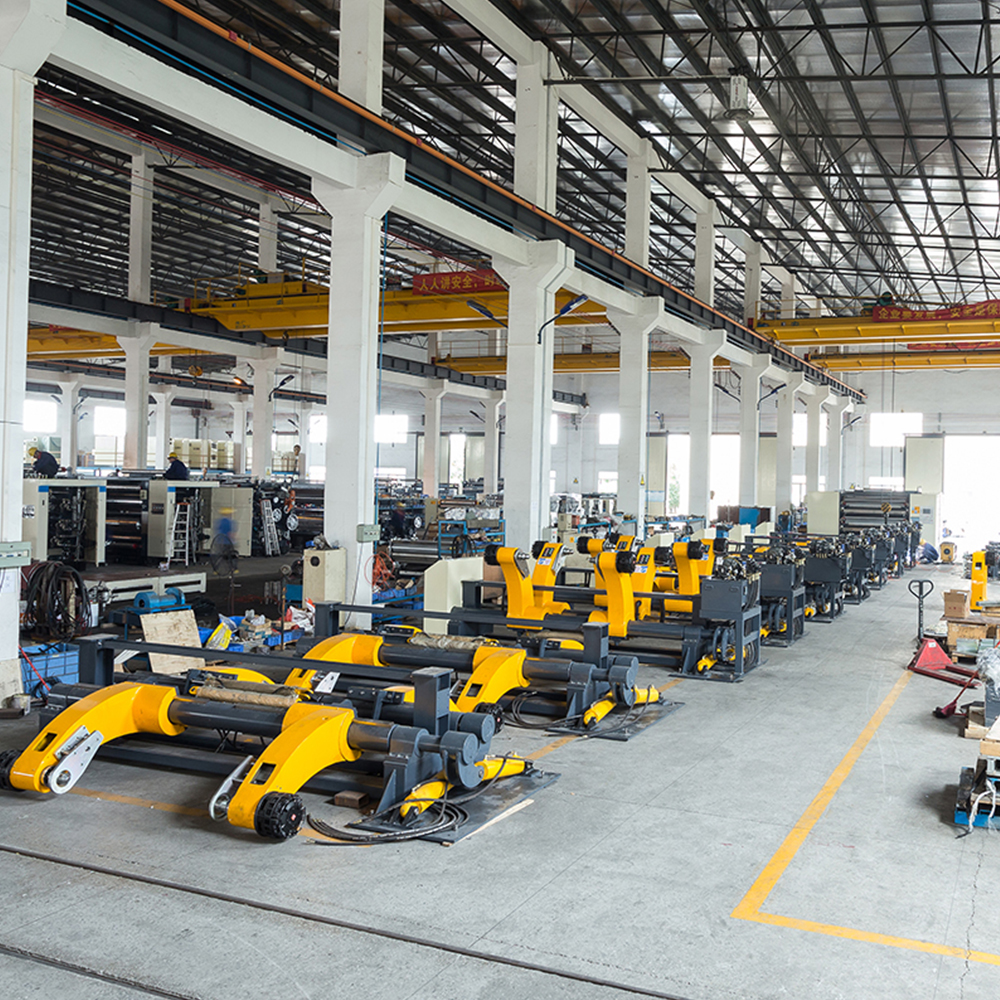
A hydraulic reel stand is the first station on a corrugated line: it carries the parent reels that feed every downstream process.
What a Corrugated Cardboard Production Line Actually Is
The cleanest definition separates two factories that usually share one roof. Board making is the corrugating stage: reels are unwound, fluted, glued and bonded into a rigid board. Box making is the converting stage: that board is printed, cut into a shape, creased, folded, joined and packed for shipment.
The two stages answer different questions. Board making answers how many layers the board has, how flat it stays and how strong the flute structure is. Box making answers what is printed on the outside, what shape the blank takes and how the box is closed. A corrugated cardboard machine is therefore a family of machines, not a product, and the phrase “production line” refers to the chain that connects them.
LLY PACK's own product scope follows the same split: the supplier lists complete corrugated lines, single facers, corrugating rollers, slitting blades, double facer belts and printer slotter die cutters as separate categories, which is a useful signal that the chain is bought station by station even when it is installed as one project.
Why “Line” Confuses First-Time Buyers
Most misunderstandings on a first corrugated project are not about machine quality. They are about scope. Three confusions cause most of the damage.
- Board making is mistaken for box making. The corrugator ends at the stacker. Printing, slotting, die cutting, folding, gluing, stitching, bundling and waste handling are separate stations with separate costs.
- A machine list is mistaken for a process sequence. Twelve machines in a quotation do not automatically make a balanced line; what matters is whether each station matches the speed and format of the next one.
- A speed rating is mistaken for sellable output. A maximum mechanical speed is a machine rating. Sustained output depends on flute profile, substrate, glue, operator skill and the quality standard you accept.
That third point deserves a number, because it is the one newcomers quote most often. LLY PACK reports a maximum mechanical speed of 300 m/min for its CCPL-1 corrugated cardboard production line, and the same 300 m/min figure appears on its 3-ply and 5-ply product pages. Those are supplier-reported mechanical ratings. They are not a claim about sustained output under a specific flute, paper grade or acceptance test, and they cannot be used to rank one brand above another without aligning the conditions.
Industry Background: Why New Lines Arrive Automated
Corrugated board is the standard shipping container material for a reason that has nothing to do with fashion: it is stiff, light, printable and foldable from a single flat blank. That combination is what makes a box plant a sequence of processes rather than a single craft.
Automation has become the default purchase posture rather than a premium option. Future Market Insights figures cited in the verified data set for this topic place automatic corrugated machines at 55.6% of the global market by automation level as of 2026. For a newcomer the practical consequence is simple: the equipment you are most likely to be quoted is already an integrated automatic line, so the useful question is not “automatic or manual” but “which stations are included, and where does the hand-off happen”.
Naming adds a second layer of difficulty. The same zone can be described at different levels of granularity. LLY PACK's component list names the double baker as one station, while its parts catalogue lists a Double facer belt (DFB-1) as a separate, replaceable item — same zone, different purchase decision. When two quotations use different words for the same station, compare the sequence, not the vocabulary.
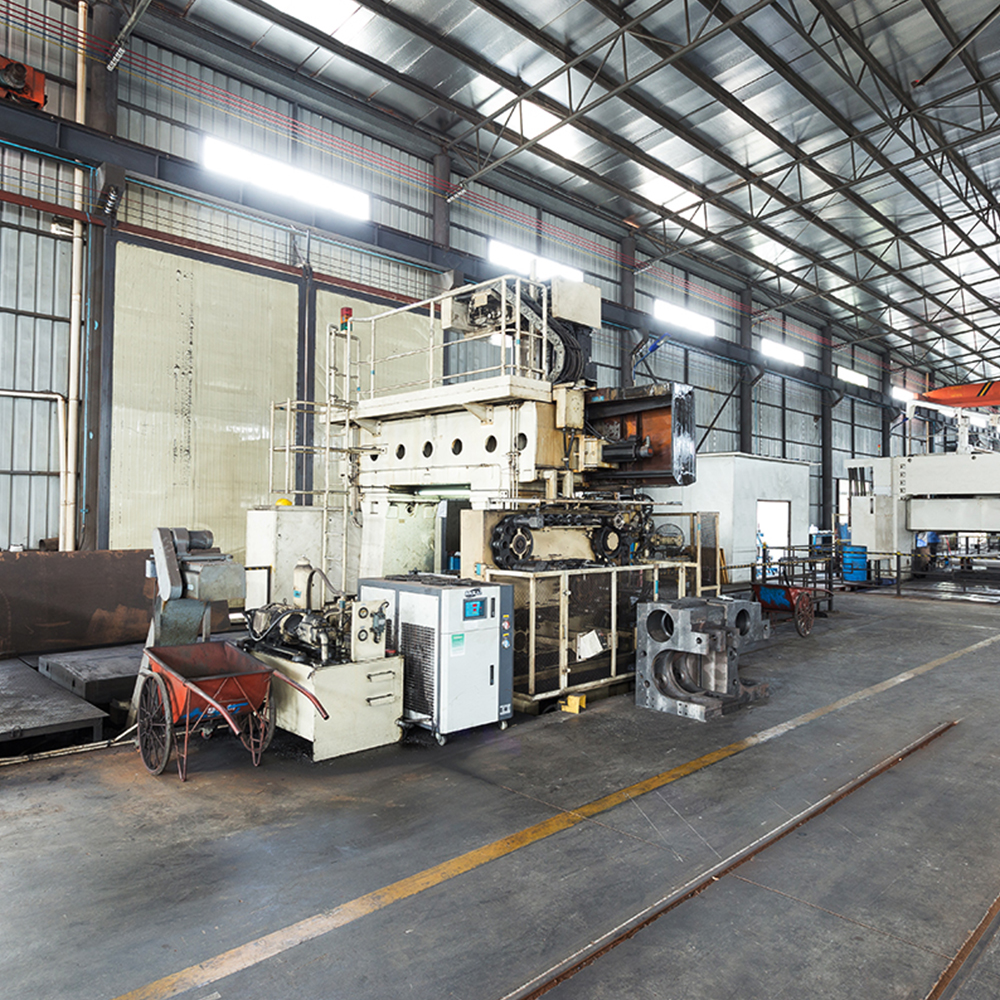
A corrugated line is installed as one connected chain: reel handling, board forming, web preparation, converting and finishing.
The Five Zones of a Corrugated Cardboard Machine Line
Every line, whatever the brand, can be read in five zones. Once you can place a machine in a zone, a quotation stops looking like a list and starts looking like a route.
Zone 1 — Reel Handling and Splicing
The line begins with paper, not with board. A paper reel conveyor (PRC-1) moves parent reels from storage to the corrugator; a hydraulic reel stand (HRS-1) carries the reels in running position and releases the web; an auto splicer (AS-1) joins the tail of a nearly finished reel to the head of the next one so the corrugator does not stop for every reel change; and a paper reel cutter (PRC-1) handles reel and paper trimming at the head of the line.
This zone is where continuous running is won or lost. A splice that fails forces a stop, and a stop at the wet end wastes material downstream. For a newcomer, the question to ask is not how fast the stand lifts, but how consistently the web enters the single facer.
Zone 2 — Board Forming: Single Facer, Glue Kitchen, Double Baker
This is the corrugating heart of the line, and the zone where the term “corrugated cardboard machine” is most literally true.
A single facer (SF-1) produces the single-face web: one flat liner is bonded to one fluted medium. The flute is formed by a corrugating roller, and adhesive is applied to the flute tips before the liner is pressed on. The corrugator line glue kitchen (CGK-1) prepares the starch adhesive used across the corrugator; adhesive consistency is one of the quiet variables behind bond quality and warp.
The single-face web then travels over the overbridge, a buffer that absorbs speed differences between the two halves of the corrugator, and passes pre-heaters before entering the double baker (double facer). There the second liner is bonded to the exposed flute tips under heat and belt pressure, and the board is dried and pulled through the hotplate section. The double facer belt (DFB-1) is the contact surface that does that pulling, which is why it is treated as both a component and a consumable.
Output from this zone is rigid board. LLY PACK reports that its corrugated cardboard production lines cover 2-layer to 9-layer configurations, so the same logic extends from a single-wall 3-ply board up to multi-ply heavy-duty constructions.
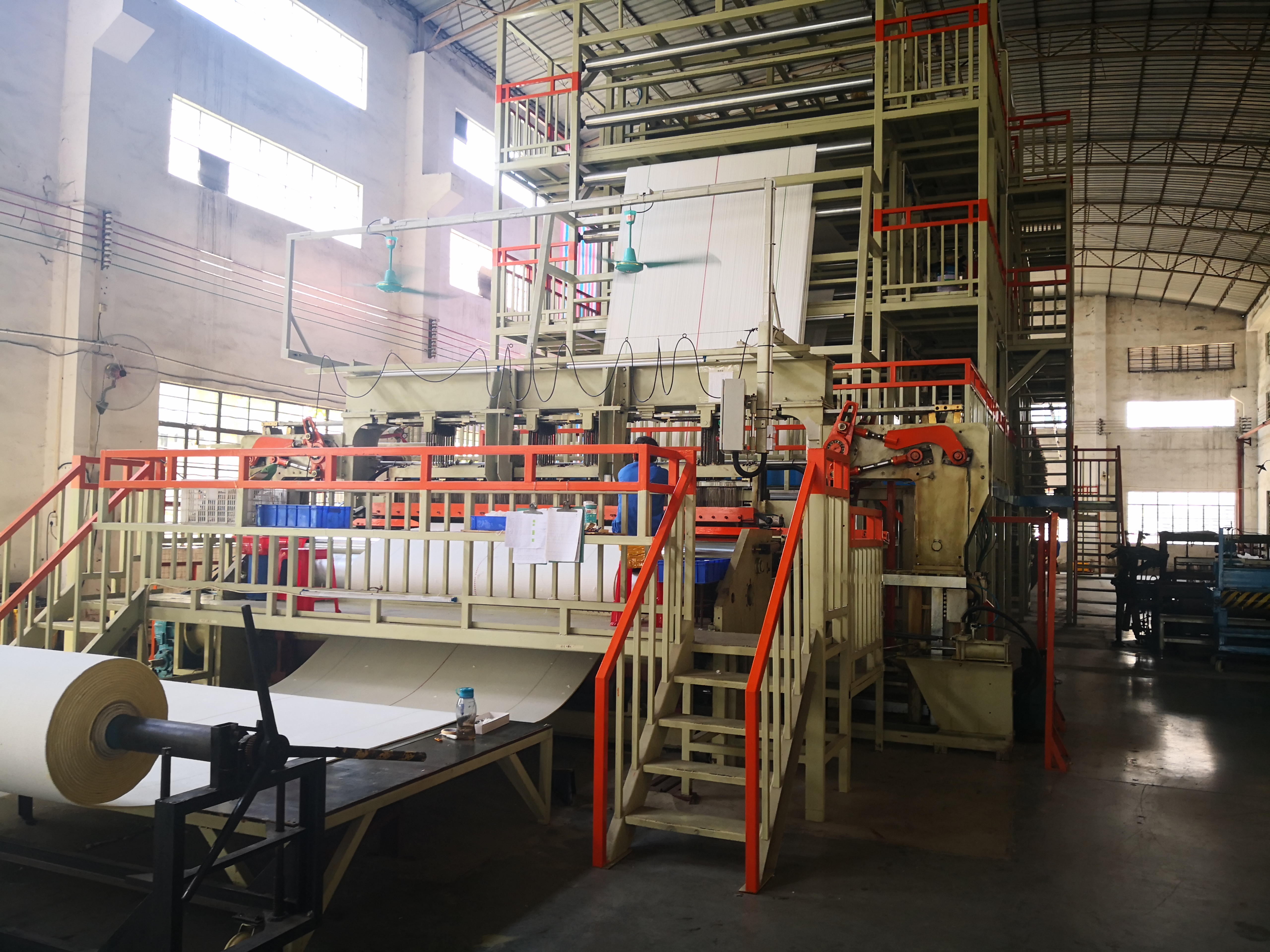
Double facer belts are produced as a replaceable component because belt condition directly affects board bonding and surface quality.
Zone 3 — Web Preparation: Slitting, Scoring, Cutting, Stacking
Wide board leaving the double baker is not yet a usable blank. A slitter scorer (SSC-1) trims the edges, slits the web into the ordered widths and presses the crease lines that will later become box corners. A cutoff then cuts the web to sheet length, and a stacker (STA-1) with a cardboard conveyor (CC-1) moves and stacks the sheets.
Trim scrap is generated here first, and again at die cutting. That is why waste handling belongs to the line design rather than to housekeeping: the earlier scrap is captured, the less it costs to handle.
Zone 4 — Printing, Slotting and Die Cutting
Flat sheets move to converting. A pre feeder (PF-1) presents sheets to the press; a flexo printer (FP-1) prints the board; a slotter die cutter (SDC-1) cuts slots, panels and handles, or rotary-dies a custom shape. A flexo graphic stereo washing machine (FGSW-1) cleans printing plates between runs.
The output of this zone is a printed, cut blank — a flat shape with fold lines, not yet a box.
Zone 5 — Folding, Joining, Bundling and Waste
The blank is folded and joined into a three-dimensional box. A folder gluer folds the blank and applies adhesive along the manufacturer's joint; a stitching machine (STM-1) joins the same joint with wire stitches where a glued joint is not the right answer, which is common in heavy-duty and multi-ply work.
Finishing follows: a bundle machine (BM-1) groups boxes, a strapping machine (SM-1) secures bundles and a wrapping machine (WM-1) protects the pallet load. Waste from the slitter scorer and die cutter is compacted by a waste paper baler (WPB-1), with a paper waste stripper removing die-cut waste from the blank. Two optional stations complete the picture for plants that need them: a cardboard laminater (CL-1) for laminated board and a carton testing instrument (CTI-1) for board and carton testing.
Step-by-Step: How a Box Travels Through the Line
Read in sequence, the same equipment becomes eight hand-offs. Each one is a place where a newcomer should ask a specific question.
Step 1 — Reel staged and spliced
Parent reels are moved by conveyor to the hydraulic reel stand, and the auto splicer joins the running web to the next reel. Ask: what reel sizes and widths does the stand and splicer accept?
Step 2 — Single-face web formed
The single facer flutes the medium, applies adhesive to the flute tips and bonds a liner. Ask: which flute profiles are in scope for your product mix?
Step 3 — Board bonded and dried
The single-face web crosses the overbridge, is pre-heated, and is bonded to the second liner in the double baker under belt pressure. Ask: how is belt condition monitored and how often is the DFB-1 replaced?
Step 4 — Board slit and scored
The slitter scorer trims, slits to ordered widths and creases fold lines. Ask: how many outs and what minimum slit width can the SSC-1 handle?
Step 5 — Sheets cut and stacked
The cutoff cuts to length; the stacker and cardboard conveyor build neat stacks. Ask: how does the stacker handle board warp and short runs?
Step 6 — Sheets printed and cut to shape
The pre feeder presents sheets; the flexo printer prints; the slotter die cutter cuts slots or a die shape. Ask: what print repeat and die formats are supported for your order sizes?
Step 7 — Blank folded and joined
The folder gluer or stitching machine closes the manufacturer's joint. Ask: which joint type your customers actually specify — glued, stitched, or both.
Step 8 — Bundled, strapped, wrapped, waste baled
Bundles are formed, strapped and wrapped for dispatch; trim and rejects are compacted by the waste paper baler. Ask: how much trim your own order profile will generate and how it will be baled.
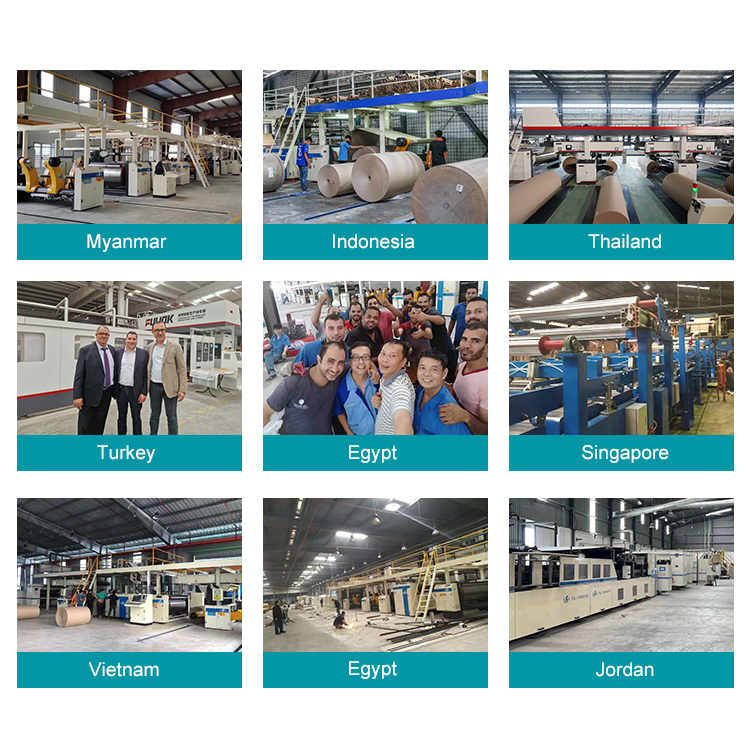
An installed corrugated line at a carton manufacturer's site, where the eight hand-offs run as one continuous process.
Use Cases: Where This Sequence Shows Up
Building a plant from scratch
A corrugated carton manufacturer working with LLY PACK built a complete corrugated carton production line from scratch, with fully automatic production, installed as 9 units over a 10-year period across countries including Myanmar, Indonesia, Thailand, Turkey, Egypt, Singapore, Vietnam and Jordan. Read the sequence above and that project becomes easier to interpret: a from-scratch plant is bought zone by zone, and the schedule reflects it.
Adding converting capacity to an existing corrugator
A converter who already makes board but prints and cuts at a slower rate is buying zones 4 and 5, not a corrugator: pre feeder, flexo printer, slotter die cutter and plate washing on one side, folder gluer, stitcher, bundling, strapping and baling on the other. Matching those stations to an existing board speed is the whole project.
Heavy-duty and multi-ply work
Where boxes must carry serious weight, the ply configuration changes the equipment and the joint. LLY PACK reports lines covering 2-layer to 9-layer configurations, which is why the stitching route (STM-1) matters alongside folder gluing.
One-stop sourcing and spare parts
Plants that want one supplier for the line and for wear items — double facer belts, corrugating rollers, slitting blades — can source both from the same scope, which shortens the spare-parts conversation later.
Stage-by-Stage Reference Table
The table below is the map in one place. Model codes are LLY PACK product designations; stations marked without a code are described at zone level.
| Stage | Equipment (LLY PACK model) | What it does | What to verify before you sign |
|---|---|---|---|
| Reel handling | Paper reel conveyor (PRC-1), Hydraulic reel stand (HRS-1) | Moves and carries parent reels into running position | Reel diameter and width range; how the web is released into the single facer |
| Splicing | Auto splicer (AS-1) | Joins the running web to the next reel without stopping the corrugator | Splice reliability at your running speed; what happens on a failed splice |
| Reel and paper trimming | Paper reel cutter (PRC-1) | Trims reel and paper at the head of the line | Trim width tolerance and scrap handling |
| Single-face forming | Single facer (SF-1), corrugating rollers | Flutes the medium and bonds one liner to it | Flute profiles in scope; corrugating roller condition and replacement route |
| Adhesive preparation | Corrugator line glue kitchen (CGK-1) | Prepares the starch adhesive used across the corrugator | Recipe control and how adhesive consistency is maintained |
| Bonding and drying | Double baker, double facer belt (DFB-1) | Bonds the second liner to the single-face web and dries the board | Belt lifecycle, board flatness and warp control on your paper grades |
| Slitting and scoring | Slitter scorer (SSC-1) | Trims, slits to ordered widths and presses crease lines | Number of outs, minimum slit width, blade and score profile options |
| Cutting and stacking | Cutoff, stacker (STA-1), cardboard conveyor (CC-1) | Cuts sheets to length and builds stacks | Sheet length accuracy, stacking quality on short runs |
| Printing | Pre feeder (PF-1), flexo printer (FP-1), stereo washing machine (FGSW-1) | Presents sheets, prints the board, cleans plates between runs | Print formats and repeat range; plate change and cleaning time |
| Slotting and die cutting | Slotter die cutter (SDC-1) | Cuts slots, panels and handles, or rotary-dies custom shapes | Die formats supported; waste removal from die-cut blanks |
| Folding and joining | Folder gluer, stitching machine (STM-1) | Closes the manufacturer's joint by adhesive or wire stitch | Which joint your customers specify; board caliper range |
| Finishing and waste | Bundle machine (BM-1), strapping machine (SM-1), wrapping machine (WM-1), waste paper baler (WPB-1) | Groups, secures and protects boxes; compacts trim and rejects | Bale handling, bundling counts, end-of-line labour |
For reference, the installed project cited earlier looks like this at a glance:
| Reference point | Detail |
|---|---|
| Client type | Corrugated paper carton manufacturer |
| Scope | Complete corrugated carton production line, built from scratch |
| Scale | 9 units installed |
| Duration | 10 years |
| Production mode | Fully automatic |
| Markets | Myanmar, Indonesia, Thailand, Turkey, Egypt, Singapore, Vietnam, Jordan |
Frequently Asked Questions
Is a corrugated cardboard production line certified, and what documents should a first-time buyer request?
LLY PACK's production lines are certified to ISO 9001:2015 under certificate number 60126Q00004R000, issued by Guangdong Zhongjing Testing and Certification Co., Ltd. against the standard GB/T 19001-2016/ISO 9001:2015. The certificate was issued on 2026-01-14 and is valid until 2029-01-13. Ask for a copy with the scope matching the equipment you are buying, and pair it with the commercial acceptance criteria agreed in writing: LLY PACK states pre-shipment test as its acceptance criterion, with delivery terms FOB, CIF, EXW or DAP and payment by T/T. Certification confirms a management system; the pre-shipment test confirms the machine.
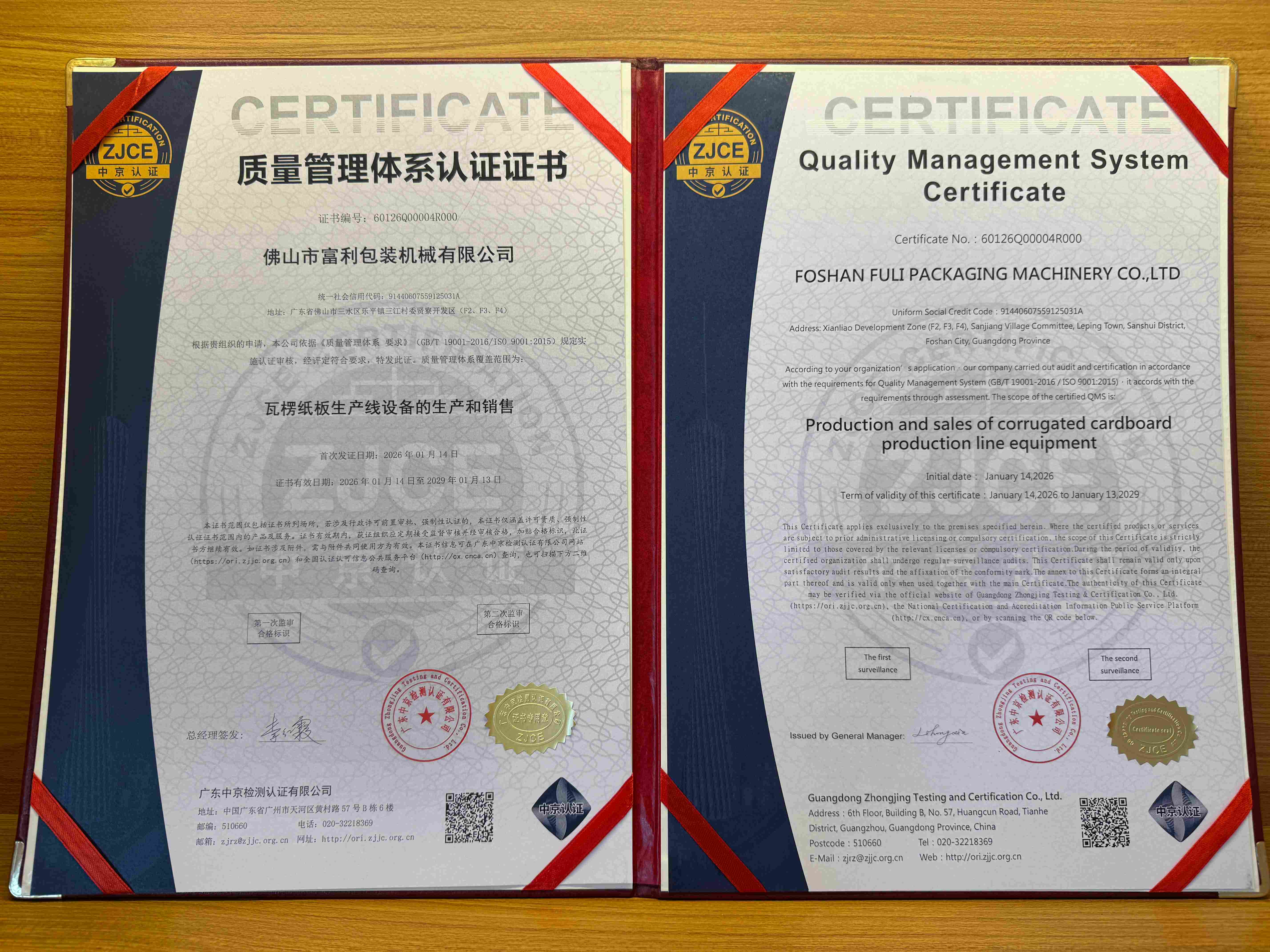
LLY PACK's ISO 9001:2015 certificate, number 60126Q00004R000, valid from 2026-01-14 to 2029-01-13.
How wide, how fast and how many layers can a line be supplied?
LLY PACK reports production line widths of 1400–2800 mm across its corrugated line offering, and reports maximum mechanical speeds of 300 m/min for the CCPL-1 line and for its 3-ply and 5-ply configurations. Ply coverage is reported as 2-layer to 9-layer. Treat the speed figure as a rating, not a forecast: ask what flute profile, paper grade and acceptance standard the rating assumes, and what sustained output is expected on your own order mix.
What drives the cost of a line, and what are the standard commercial terms?
Cost follows scope, not brand alone: which of the five zones are included, the ply configuration, the line width, the automation level, and whether converting equipment such as the flexo printer, slotter die cutter, folder gluer or waste paper baler is part of the same order. Comparing two quotations without a station-by-station scope sheet is the most common first-project mistake. The stated commercial terms from LLY PACK are MOQ 1 set, delivery terms FOB, CIF, EXW or DAP, payment by T/T, and acceptance by pre-shipment test.
Can we validate board and boxes before committing to a full line?
Validation starts with the acceptance criterion: LLY PACK states pre-shipment test, which means the machine is checked before it leaves, not only after installation. Because the product scope includes a carton testing instrument (CTI-1) alongside the corrugated line, board and carton testing can be built into that conversation rather than treated as an afterthought. For a from-scratch plant, the practical alternative to a single large commitment is a phased build — the reference project cited in this article was installed as 9 units over 10 years, which shows that staged commissioning is a normal pattern rather than an exception.
How long does delivery and commissioning take?
No standard lead time is published in the available material, and a realistic schedule depends on configuration, ply count, width and how much converting equipment is included. What is documented is the commercial framework: delivery terms FOB, CIF, EXW or DAP, acceptance by pre-shipment test, and payment by T/T. The workable approach is to request a written schedule zone by zone — reel handling and corrugating first, converting and finishing second — and to confirm installation and training responsibilities in the same document. If you want to scope that schedule against your own product mix, the LLY PACK catalogue is available for download and the team can be reached directly for a quotation.
Conclusion: Learn the Sequence First, Then Compare
A corrugated cardboard production line is best understood as a route, not a product. Reels enter at the hydraulic reel stand, are spliced, fluted and bonded into board at the single facer and double baker, trimmed and creased at the slitter scorer, printed and cut at the flexo printer and slotter die cutter, folded or stitched into a box, and finally bundled, strapped and wrapped while trim is compacted in the waste paper baler.
Once that route is clear, three questions do most of the work in any first evaluation. Which zones are in scope? Where does the hand-off happen between them? And what evidence — certification, acceptance criteria, reference installations — supports the claims on the datasheet? A buyer who can answer those three can compare a twelve-line quotation and a five-zone proposal on equal terms.
Next Step: Scope Your Line by Zone
CatalogueQuotationLine layout
LLY PACK (HK) CO., LIMITED supplies corrugated cardboard production lines and the individual stations described in this article — hydraulic reel stands, auto splicers, single facers, slitter scorers, stackers, stitchers, waste paper balers and double facer belts. Share your board specification and target format, and the team can mark up the five zones against your product mix.
Download the catalogue: LLY PACK product brochure (PDF)
Website: www.llypack.com
Email: christina@lycorrugated.com
WhatsApp: +86 13763260555

Delivery terms quoted for LLY PACK equipment: FOB, CIF, EXW or DAP, with acceptance by pre-shipment test.
Have Questions or Need More Details?
Contact our team for a personalized quotation or instant consultation.
Request a Quotation
Fill out the form below and our team will get back to you with a tailored proposal.
WhatsApp Direct Chat
Prefer to chat in real-time? Message us on WhatsApp for instant assistance & quick answers.
- Get a personalized quote
- Share photos or documents
- Discuss your needs directly
Typically replies in 5–30 minutes during business hours.