
New vs. Rebuilt Corrugated Cardboard Lines: A Practical Comparison Guide
New vs. Rebuilt Corrugated Cardboard Lines: A Practical Comparison Guide
Corrugated packaging demand continues to grow worldwide, and buyers face a common strategic question: should you invest in a brand-new corrugated cardboard production line or acquire a rebuilt line? The answer is not simply a matter of purchase price. Production speed, automation level, energy efficiency, maintenance cost, uptime, and the supplier's ability to engineer a complete line all determine the real cost of ownership and output reliability.
This comparison guide examines both options using practical criteria that matter to corrugated board and box manufacturers in high-volume environments. Where dimensional or speed data are needed, verified specifications from LLY PACK's line components—such as the SF-1 Single facer and SSC-1 Slitter scorer—serve as realistic engineering references.
How to Define a Rebuilt Corrugated Cardboard Production Line
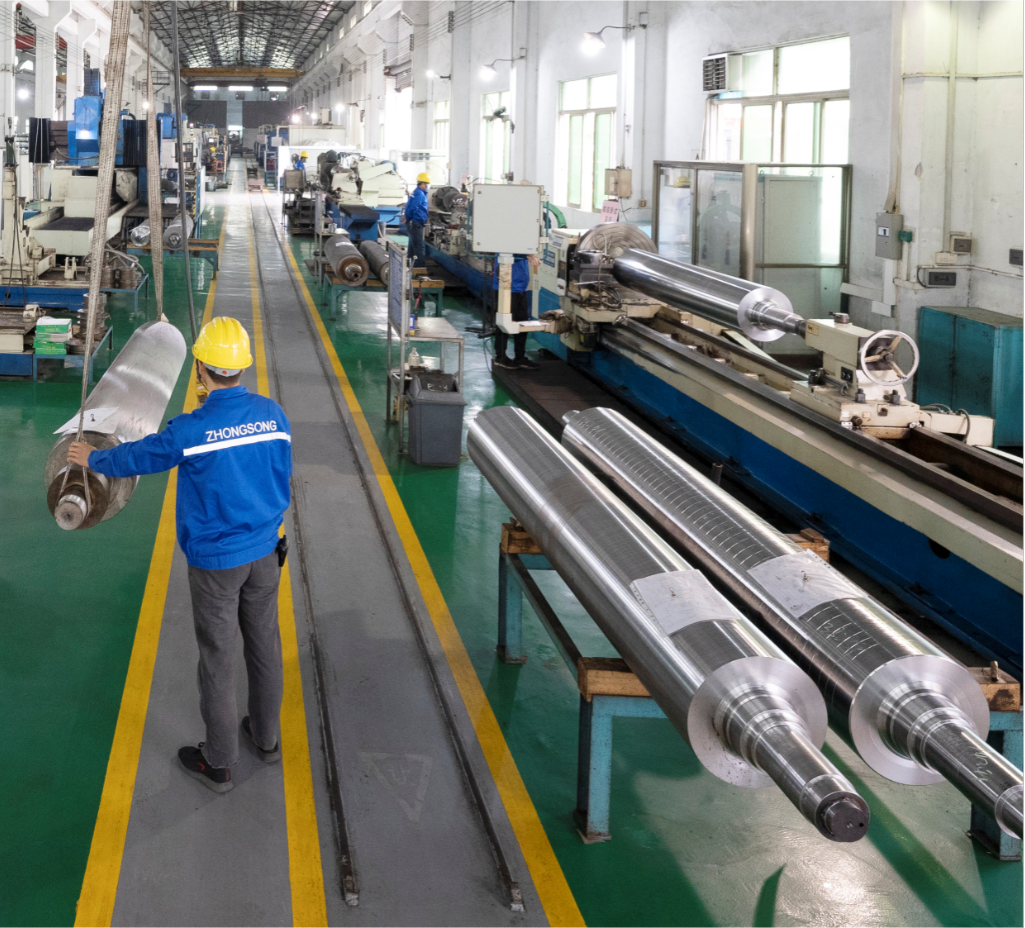
A rebuilt corrugated line usually refers to a previously used corrugator and its downstream finishing equipment that has been partially or fully reconditioned. Rebuild scope varies widely between suppliers: some replace only worn rolls and belts, while others re-engineer control systems, update line speed capabilities, and re-certify machine safety and electrical systems. Buyers should therefore treat “rebuilt” as a specification statement, not a uniform product category.
A new line, by comparison, starts with newly manufactured components for each stage: reel handling, splicing, single facer, glue application, double facer, slitting and scoring, stacking, printing, die-cutting, folding, stitching, strapping, and conveying. Because the supplier designs the complete line around the buyer's required board grades and output speeds, the mechanical and control parameters are matched from the outset.
Understanding the Total Cost of Ownership
The initial purchase price is only one part of the cost equation. Total cost of ownership includes installation, commissioning, tooling, utility consumption, consumables, spare parts, maintenance labour, downtime, and the resale value after the intended service life. A rebuilt line may offer a lower entry price, but older mechanical components and less advanced control systems can increase energy consumption and downtime frequency.
When comparing offers from different suppliers, calculate the expected cost per running hour, not only the price per metre of working width. A line that produces more saleable square metres per shift and consumes less energy per square metre may justify a higher capital investment.
Capital Cost Vs. Operating Cost At a Glance
| Cost Factor | New Corrugated Cardboard Line | Rebuilt Corrugated Cardboard Line |
|---|---|---|
| Purchase price | Higher initial investment | Lower acquisition cost |
| Installation and tooling | Clearly defined new-equipment installation | May require retrofit engineering and custom tooling |
| Energy and steam consumption | Newer designs target efficient heating and driving | Older architecture may consume more per unit |
| Maintenance and spare parts | Predictable OEM spare parts | Depends on rebuild quality and remaining part life |
| Downtime risk | Lower in early life, subject to warranty | Depends on condition of rolls, belts, frames, and motors |
| Useful operating life | Full new-machine life with proper servicing | Shorter remaining life between major mechanical overhauls |
The table compares typical procurement considerations. Actual cost depends on the specific proposal and operating conditions.
Performance Benchmarks to Evaluate Before Purchase
The physical performance of a corrugating line is best assessed through component-level specifications. An example is the Single facer, the machine that forms the flute between the liner and medium. On the SF-1 Single facer from LLY PACK, the design speed is 250 M/min, working widths range, and the flute-roll diameters are 380 mm for both upper and lower flute rolls, with a pressure roll diameter of 385 mm and a glue-application roll diameter of 302 mm. The machine is intended for corrugated box packaging production.
The Slitter scorer sets the board width and crease positions before conversion. For high-volume lines, the SSC-1 Slitter scorer offers a production capacity of 630–900 m/min and a maximum paper width of 2200 mm, with a minimum slitting width of 150 mm. These numbers provide a reference for the speed that downstream finishing equipment must match.
For the full corrugator, the CCPL-1 Corrugated Cardboard Production Line lists a maximum mechanical speed of 300 m/min, a production line width of 1400–2800 mm, steam heating, and a line space requirement of about 110 m (L) by 14 m (W) by 6.5 m (H).
These verified parameters let a buyer compare new and rebuilt proposals on a technical basis instead of relying on general claims. If the rebuilt line cannot demonstrate similar component-level performance, its capacity and uptime expectations may be materially lower than a modern new line.
Uptime and Reliability Expectations
In corrugated board production, uptime determines revenue. A line that stops for avoidable reasons creates scrap, missed delivery windows, and extra labour cost. New equipment, with synchronized control logic and fresh mechanical tolerances, normally offers a more predictable uptime curve during the first several years. The warranty period further transfers early risk to the supplier.
Rebuilt lines change that risk profile. Even when the rebuild includes new bearings, belts, and electrical controls, the original frames, flute rolls, pressure rolls, preheating cylinders, and heating sections retain their remaining fatigue life. Buyers should request a detailed rebuild log, including which components are new versus reused, and verify how the rebuilt line's maximum speed compares with a newly engineered line such as the CCPL-1 reference design.
Questions to Ask About Rebuild Scope
Rebuild audit checklist:
- Which corrugating components are new: rolls, pressure rolls, glue rolls, preheating rolls?
- Are the electrical and control systems original or updated to a new standard?
- What is the guaranteed maximum mechanical speed after the rebuild?
- Which original parts remain from the previous production line?
- Does the supplier provide spare-parts availability for every retained component?
- Is the rebuild tested under load before delivery?
Component-Level Comparison: What a New Complete Line Includes
In a complete production line, every workstation affects the final box quality and cost. A corrugated cardboard production line generally begins with a reel stand that holds the paper rolls, an automatic splicer for roll changes, a single facer that forms the corrugated web, bridges and preconditioning rolls, a glue machine, a double facer that bonds the web to liners, slitter scorcer, cut-off, stacker, and downstream converting units such as flexo printer-slotters, die-cutters, folders, gluers or stitchers, strapping/bundling machines, and conveyors.
A rebuilt line often combines machinery from different ages and manufacturers. This can create interface problems in speed matching, glue application settings, board warp control, and order changeover. A new line can be more easily engineered as a synchronized whole.
Below is a reference overview of representative LLY PACK components and their verified specifications:
| Line Station | Model | Key Verified Reference Spec |
|---|---|---|
| Hydraulic Reel Stand | HRS-1 | Paper roll diameter 300–1500 mm; width range 1400–2800 mm |
| Auto Splicer | AS-1 | Speed 300–400 m/min; paper width 1200–2550 mm |
| Single facer | SF-1 | Design speed 250 M/min; upper/lower flute roll diameter 380 mm |
| Slitter scorer | SSC-1 | Production capacity 630–900 m/min; max paper width 2200 mm |
| Flexo printer | FP-1 | Maximum equipment speed 350 sheets/min; max feed size 1600 x 3600 mm |
| Slotter Die cutter | SDC-1 | Max die-cutting speed 5000 i.p.h; pressure 350 tons; paper thickness 0.5–5 mm |
| Stitching machine | STM-1 | Speed 450 nails/min; stitching pitch 30–140 mm |
| Strapping Machine | SM-1 | Capacity 35 bundles/min (single strap); band width 5 mm |
| Cardboard Conveyor | CC-1 | Max bundle weight 3000 kg; stacking height up to 1800 mm |
Specifications are taken from published LLY PACK product data and are included to illustrate typical modern new-line component performance.
Automation and Quality-Control Capabilities
Automation influences consistency and labour productivity. Automatic splicer and feeding systems reduce manual intervention at the wet end. Automatic stacking and conveying systems reduce repetitive handling at the dry end.
For print quality on corrugated board, the FP-1 Flexo printer can operate at a maximum equipment speed of 350 sheets/min, with a maximum feed size of 1600 x 3600 mm. A matching board line should be capable of supplying flat, well-conditioned board at that pace. If a rebuilt corrugating section has lower speed or poor warp control, the downstream printer's productivity cannot be fully utilized.
New lines also permit better integration of glue kitchen automation, which controls starch viscosity and temperature. Uniform glue application is critical for the adhesion produced between flutes and linerboards in the double facer section.
Quality Reference: Carton Testing Instruments
Box compression strength and edgewise crush resistance are basic performance criteria for corrugated packaging. On a new line, buyers can rationalize upstream material input because the converting machine is expected to achieve the required caliper, flute profile, and adhesion. A rebuilt machine with worn flute rolls may produce a slight profile variation that increases paper consumption or lowers compression strength. In a quality-control environment, instruments such as the CTI-1 Carton testing instrument measure burst strength (250–5600 kPa), crush resistance (60–3000 N), and board thickness (0.01–60 mm). Verifying quality after installation is essential for either route.
Supplier Engineering and Manufacturing Capability
A new line is only as reliable as the supplier's engineering depth. For this reason, experienced buyers assess the machine builder's own factory, machining capability, R&D team, and installation track record.
LLY PACK (HK) CO., LIMITED is a packaging machinery manufacturer with a factory located in Foshan City, Guangdong Province, China. The company states that it operates a state-of-the-art facility with a total area of 57,000 square metres, more than 25 years of experience in corrugated machines and high-speed corrugated cardboard production lines, and more than 100 patents and industry certificates. Its manufacturing resources include four advanced CNC centers from Japan, including a five-face machining center with computer control. Corrugating roll precision directly influences flute formation over long production runs, so CNC machining capability offers practical evidence for a supplier's ability to manufacture repeatable new components.
LLY PACK reports that its machines have been exported to more than 40 countries, with more than 3,500 successful installations of corrugated lines worldwide. For a buyer comparing new vs. rebuilt lines, this kind of installed base matters because it shows the supplier's ability to support a complete line, provide spare parts, and deliver the full scopes required for building a production line from scratch.
Use Case: Building a Complete Production Line from Scratch
A multi-country packaging project demonstrates what a new complete corrugated line installation may look like. The project, located across multiple countries in Asia and the Middle East, involved the installation of 9 units and construction of a complete corrugated carton production line over a 10-year period. The countries include Myanmar, Indonesia, Thailand, Turkey, Egypt, Singapore, Vietnam, and Jordan. The customer was a corrugated paper carton manufacturer, and the result was described as a successfully built complete corrugated carton production line from scratch, with fully automatic production.
That example is not a claim that rebuilt lines never make sense. It illustrates the scale of planning, component integration, and supplier responsibility that a complete new production line entails.
For more detailed machine data, review the LLY PACK brochure.
When a Rebuilt or Refurbished Line Could Be Sensible
A rebuilt line can be rational in several cases:
- Very low starting budget: the buyer cannot fund a new line but must begin producing board quickly.
- Niche or pilot production: output quality is secondary, and the buyer can tolerate more downtime.
- Proven rebuild specialist: the rebuilder has access to original drawings, makes replacement rolls, and can load-test the line.
- Short-term capacity bridging: the line is intended to serve a temporary demand spike until a larger new investment is approved.
Even in these cases, the buyer should still compare the old line's working width, maximum line speed, and board grade capability against the order mix. A low-price rebuilt line is not a bargain if it cannot efficiently make the required flute types and board widths.
Decision Framework: New vs. Rebuilt Corrugated Line
| Decision Factor | Favours a New Line | Favours a Rebuilt Line |
|---|---|---|
| Production speed target | Need 250 M/min or above at the single facer, up to 300 m/min line-class operation | Accept lower speed and longer cycle time |
| Automation level | Fully automatic splicing, feeding, conveying, stacking; high labour efficiency | Manual or semi-automatic operation is acceptable |
| Board quality consistency | Large customers require highly consistent caliper, strength, and printability | Internal or undemanding packaging market tolerates variation |
| Energy and waste control | Steam and electricity cost is a priority; modern glue and heating systems | Energy price is low relative to capital scarcity |
| Supplier support | OEM full-line support from one accountable partner | Buyer or rebuilder accepts maintenance and spare-part risk |
| Budget and financing horizon | 10-year production plan, lower annual operating cost | 24–36 month payback window and acceptable downtime |
Recommendations for Buyers in the Evaluation Stage
Buyers preparing a capital request should first create a product mix plan and a realistic output scenario. From that plan, derive the required working width, single facer speed, slitter scorer output, and downstream converting throughput. Ask each supplier for a written line configuration list and component data sheet. Compare those data against a reference line such as LLY PACK's CCPL-1 at 300 m/min mechanical speed and an SSC-1 at 630–900 m/min in the finishing section.
When a new line is under evaluation, use one key document as your baseline: the full-line layout and installation plan. Verify steam pressure requirements, floor space, and electrical loading. For the CCPL-1 reference, steam pressure is listed at 10 KG/CM2, and the recommended boiler is 2, 3, or 4 MT/H depending on line speed. Floor space of roughly 110 m by 14 m layout with 6.5 m height allowance is typical for a full corrugator.
Ask for references from installations in comparable countries, and inspect those references wherever possible. The project referenced earlier in Myanmar, Indonesia, Thailand, Turkey, Egypt, Singapore, Vietnam, and Jordan demonstrates that full-line construction from scratch is feasible in emerging packaging markets, but first-hand reference visits remain necessary before deciding.
Frequently Asked Questions
Is a rebuilt corrugated cardboard production line a viable option?
A rebuilt line can be viable for buyers with limited start-up capital, a tolerant downtime schedule, or a short production horizon. It is not a uniform product category. A detailed rebuild log, verification of which parts are new or reused, load-testing, and a written performance target are all required before comparing it with a new line.
How does the speed of a new corrugated cardboard machine compare with a rebuilt machine?
Modern new components can be evaluated against published reference speeds. The LLY PACK SF-1 Single facer has a design speed of 250 M/min, while the SSC-1 Slitter scorer has a production capacity of 630-900 m/min. A rebuilt machine's maximum speed depends on the condition of its frames, rolls, and drive systems; buyers should ask for the guaranteed post-rebuild speed in the proposal.
What is the total cost of ownership difference between new and rebuilt line?
A new line usually involves higher upfront investment but can offer lower operating risk, predictable maintenance, simpler spare-part supply, and longer useful life. A rebuilt line has lower acquisition cost but may have higher energy consumption, more downtime, and shorter remaining life. Buyers should compare cost per operating hour across the planned service period.
Which equipment is typically included in a complete corrugated cardboard production line?
A complete line includes a hydraulic reel stand, auto splicer, single facer, glue machine and corrugator glue kitchen, double facer section, slitter scorer, stacker, and downstream converting equipment such as flexo printer, slotter die cutter, folder gluer, stitching machine, strapping or bundling machines, and conveyors. For example, LLY PACK supplies a full range spanning the HRS-1 Hydraulic Reel Stand to the CC-1 Cardboard Conveyor.
How can a buyer verify the performance of a supplier's corrugated machine line?
Ask for component-level data sheets, manufacturing evidence, an installation reference list, and test data from an operating site. If possible, inspect the supplier's factory and an installed line. LLY PACK's profile states more than 3,500 installations in over 40 countries; prospective buyers can also request references from projects completed in their region.
Does LLY PACK offer complete new corrugated cardboard lines with downstream equipment?
Yes. LLY PACK (HK) CO., LIMITED supplies complete equipment scopes for corrugated cardboard production. One referenced project built a complete line from scratch with fully automatic production for customers in multiple countries, including Myanmar, Indonesia, Thailand, Turkey, Egypt, Singapore, Vietnam, and Jordan. For a detailed product list and specifications, download the LLY PACK brochure.
Need help evaluating the right line configuration for your project?
Contact LLY PACK for a component-level proposal and specification comparison.
Chat on WhatsApp | christina@lycorrugated.com | Download Brochure
Have Questions or Need More Details?
Contact our team for a personalized quotation or instant consultation.
Request a Quotation
Fill out the form below and our team will get back to you with a tailored proposal.
WhatsApp Direct Chat
Prefer to chat in real-time? Message us on WhatsApp for instant assistance & quick answers.
- Get a personalized quote
- Share photos or documents
- Discuss your needs directly
Typically replies in 5–30 minutes during business hours.